
SEO for solar companies ranks an installer across an eight-month journey in Google and AI search: tax credit research, ROI math, net metering by state, then the final installer choice. It spans technical SEO, city pages, yearly incentive content, and the local SEO and solar marketing strategies that move installers. A buyer reads nine to fourteen pages over half a year before asking for a quote.
Last March a Phoenix installer called me. He paid $2200 a month for fourteen template pages, none of which mentioned the Arizona net metering rate or the 30% federal credit, and pulled four organic leads a month. Months five and six are pure regional policy, exactly where his pages went silent, so he reached the lead form against Sunrun's ad budget with zero recall.
Most solar company SEO tips online are filler. Across the 80 plus solar pages I've ranked in 14 months, these factors move rankings, not the generic tactics most shops still push:
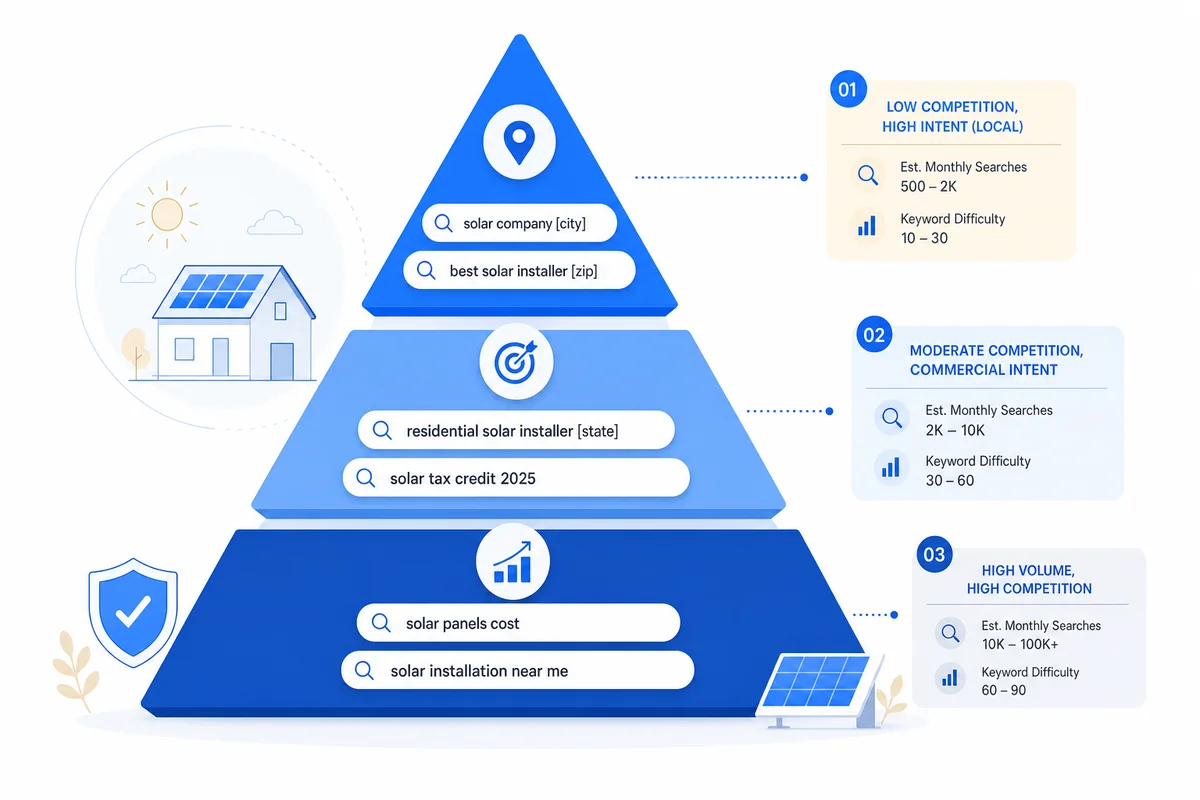
The federal Residential Clean Energy Credit sits at 30% through 2032, then steps down in 2033, so every installer needs a page updated each January when IRS Form 5695 republishes. Net metering is a state-by-state mess: California gutted its program with NEM 3.0 in 2023, Florida still pays full retail, and Arizona pays roughly 7 cents per exported kWh while charging 14. One clear page per state is what captures the buyer at month five of their research. New York installers, for instance, need pages mapped to Con Edison and PSEG-LI territories, exactly what my solar SEO for New York installers work covers.
Pair that with an ROI calculator returning payback period, 25-year savings, and credit value. Forms attached to a tool convert three to five times more than a plain contact form, as Momo proved at americaschimneysweep.com. My technical SEO audit service measures these assets, which AI engines cite under AI optimization and GEO.
National brands push leasing over ownership; SunPower filed Chapter 11 in 2024 while active warranties were still running. A local installer wins on trust, and so does a focused agency: big shops like Blue Corona run solar as one vertical among dozens and hand your account to a junior, while I write every page myself and cap the roster at twelve clients. Generic home services SEO assumes a customer who books within 24 hours, but in solar the 3-pack only matters at month eight, so your Google Business Profile optimization and city pages have to be deep.
Installers ask what SEO costs before what it includes. My three flat tiers:
| Tier | Monthly | Best for | Includes |
|---|---|---|---|
| Starter | $750 | Newer installers, 1 to 2 cities | Technical audit, 2 pages per month, GMB optimization, 1 city page |
| Pro | $1500 | Established installers, 4 to 8 cities | Starter plus 4 pages per month, state net metering page, annual tax credit refresh, AI-citation work |
| Custom | $3000+ | Multi-state installers fighting corporate brands | Custom strategy, dedicated ROI calculator build, 6 to 10 pages per month, full state coverage |
That Phoenix installer moved to Pro and within seven months went from four organic leads a month to 31, on specialization, not budget. Flat pricing makes this affordable contractor SEO, and the full SEO packages page breaks down each tier.
Every client runs a four-phase method: audit in the first 14 days, fix from days 14 to 45, build from month two, then ongoing track. The audit is where the money hides. On Or's site at denvergaragedoor.com I found seven pages Google never indexed; fixing that added 19% to his traffic that month.
These results carry over to solar clients. Or, owner of Denver Garage Door, came to me with 13 More on google reviews against a competitor sitting on 253. Within 11 months he ranked in the local 3-pack for "garage door repair Denver," above that rival, on 22 city pages and technical fixes.
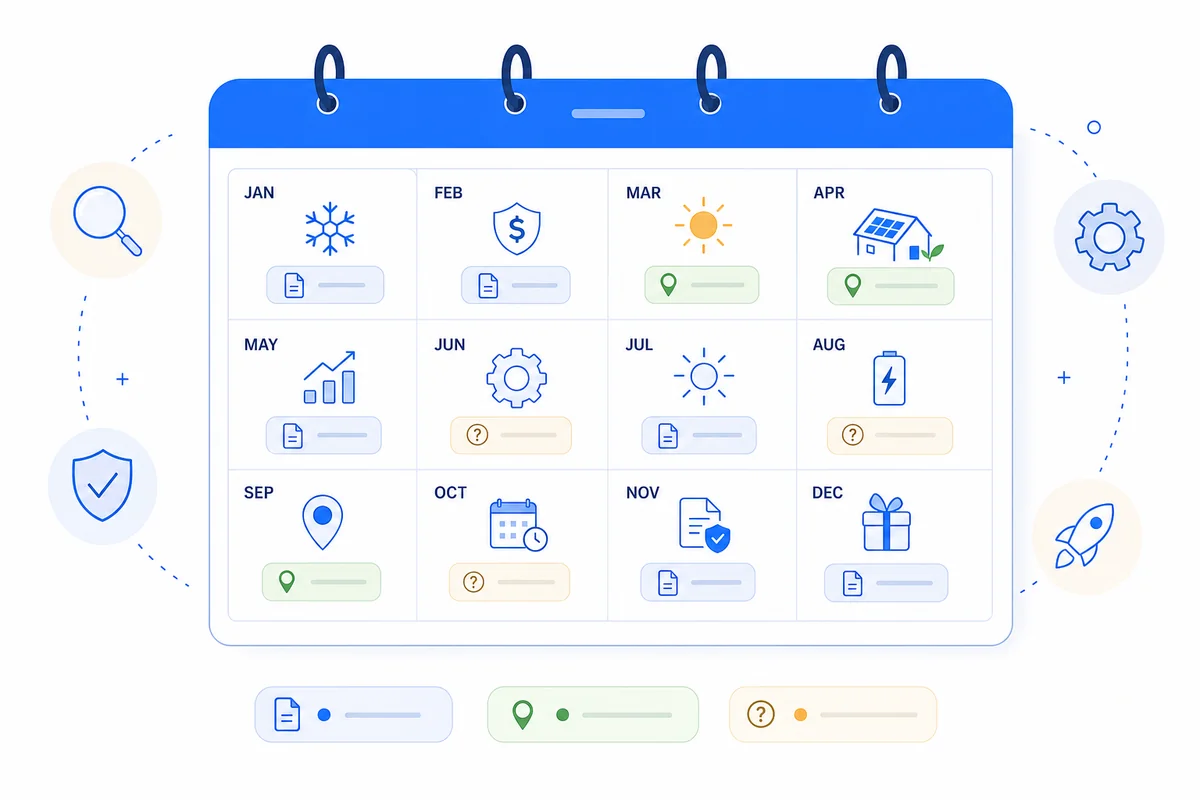
AI search is a real lead channel for solar, yet most installer sites are absent from it. The pages ChatGPT, Perplexity, and Google AI Overview cite share four traits: question headings with direct first-sentence answers, specific numbers, a recent last-updated date, and a named author. Get those right and you win brand visibility in AI search engines.
The difference from generic SEO is timing, not tactics: you rank for tax credit and net metering questions early in the journey, then for "solar installer near me" at the end.
One that works only in home-service SEO and writes every page personally. I'm Lior Daniel, a software developer and SEO specialist for six-plus years, with a background at government and airline-sector organizations, now focused on AI-engine optimization. I cap myself at twelve clients, including Or at Denver Garage Door, Tomer at Pine Garage Doors, Momo at America's Chimney Sweep, Linoy at SASS Facial Spa, and Alex at Ace Locksmith SF.
My flat tiers run $750, $1500, and $3000 plus per month, with no setup fee and no lock-in. Agencies quoting $4000 a month on a twelve-month contract are usually charging for ad management.
Solar buyers want an installer who can drive to the house, pull permits, and handle warranty visits, so the final choice stays hyperlocal even after months of research. Without deep city pages and a tuned Google Business Profile, you never enter the set.
First technical wins land in 30 to 60 days, ranking movement at month four to six, and lead volume between months five and eight. See how long local SEO takes for context.
Wondering whether your SEO holds up across the eight-month buyer journey? I'll personally record a 20-minute screen share showing what's broken and where leads leak. No template report. Book your free SEO consultation and see your site through a buyer's eyes.
This is one focus inside the home services SEO playbook.
The off-page side covers local schema markup.

I specialize in home services SEO: taking websites that sit invisible on page three and turning them into the business Google and ChatGPT recommend first. I started on the developer side, writing software and doing SEO on the side, until I saw how much home-service owners were overpaying for work that quietly hurt them. So I built a method that fixes the broken technical work and the outdated thinking behind it.
From garage door companies to plumbers, roofers, locksmiths and cleaning services, the playbook is the same: rank where your customers actually search, earn real reviews, and back it with a fast site that books the job. No PBNs, no bought reviews, no directory spam. Only work that survives Google’s next five updates. See exactly how it’s priced on the pricing page.
Free 30-minute strategy call