If your competitors are getting named in ChatGPT and you are not, this page covers how to improve brand visibility in ai search engines for home service businesses. Plumbers, HVAC techs, garage door installers, and locksmiths are losing leads to competitors who appear inside AI answers. I see it in SEO for HVAC contractors and locksmith SEO alike. Most owners don't know it's happening. That's the opening.
Last updated: May 2026.
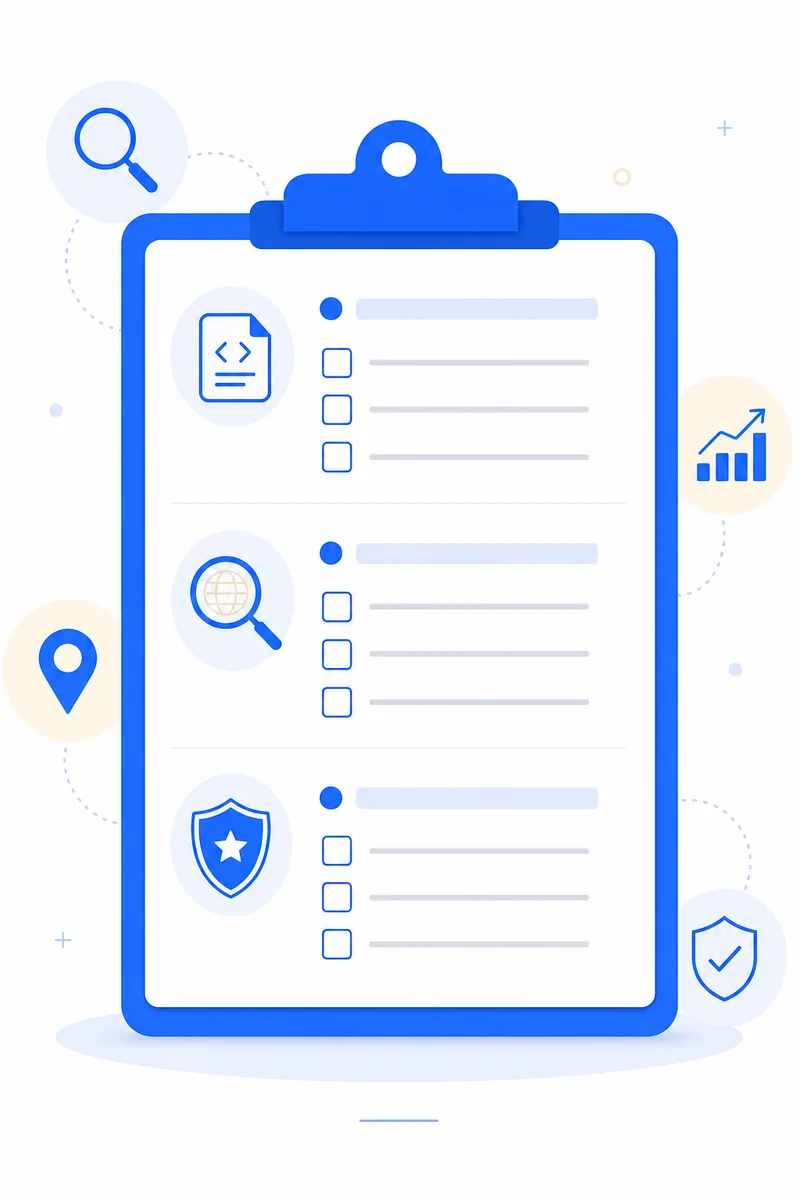
Six moves, in order. (1) Reverse-engineer the directories ChatGPT, Perplexity, Gemini, and Claude cite in your niche. (2) Register on every tier-1 directory with identical NAP. (3) Deploy a schema stack: Organization, LocalBusiness, FAQPage, HowTo, Article, BreadcrumbList. (4) Rewrite key pages with Q&A blocks, stat blocks, and tables AI engines extract verbatim. (5) Build E-E-A-T signals: named author, real client URLs, cited sources, visible update date. (6) Track citation rate monthly across all 5 engines on 20 to 50 priority queries. Expect first citations in 30 to 45 days, real share by month 3. The right AI SEO tools for brand visibility in ChatGPT speed steps 1 and 6, and a purpose-built AI search optimization tool with ChatGPT integration cuts the tracking time per engine from hours to minutes.
Every solution sold for AI search brand presence optimization falls into one of three buckets. Know which one you are buying.
Get listed, with the same name, address and phone, on the directories, review sites and forums the engines cite for your trade and city. This is most of the work and no software does it for you.
Make your own pages easy to quote: a direct answer under each heading, real prices, service areas, and a named person behind the business.
Run the same customer questions through each engine every month and log who gets named. Without this you cannot tell if the first two worked. I compare the tools in my ChatGPT SEO tracking tools review.
Brand visibility in AI search is how often ChatGPT, Gemini, Perplexity, Copilot and Google AI Overviews name your business when a customer asks a question you should answer. It is not a ranking. The engine picks a few names and explains why. Your goal is to be one of them, described correctly.
Customers also cross-check. Someone who hears your name from ChatGPT often searches it on Google before calling. A business that shows up in both places looks more trustworthy than one that shows up in only one.
The same sequence I run for every paying client. Order matters; skipping steps breaks the chain.
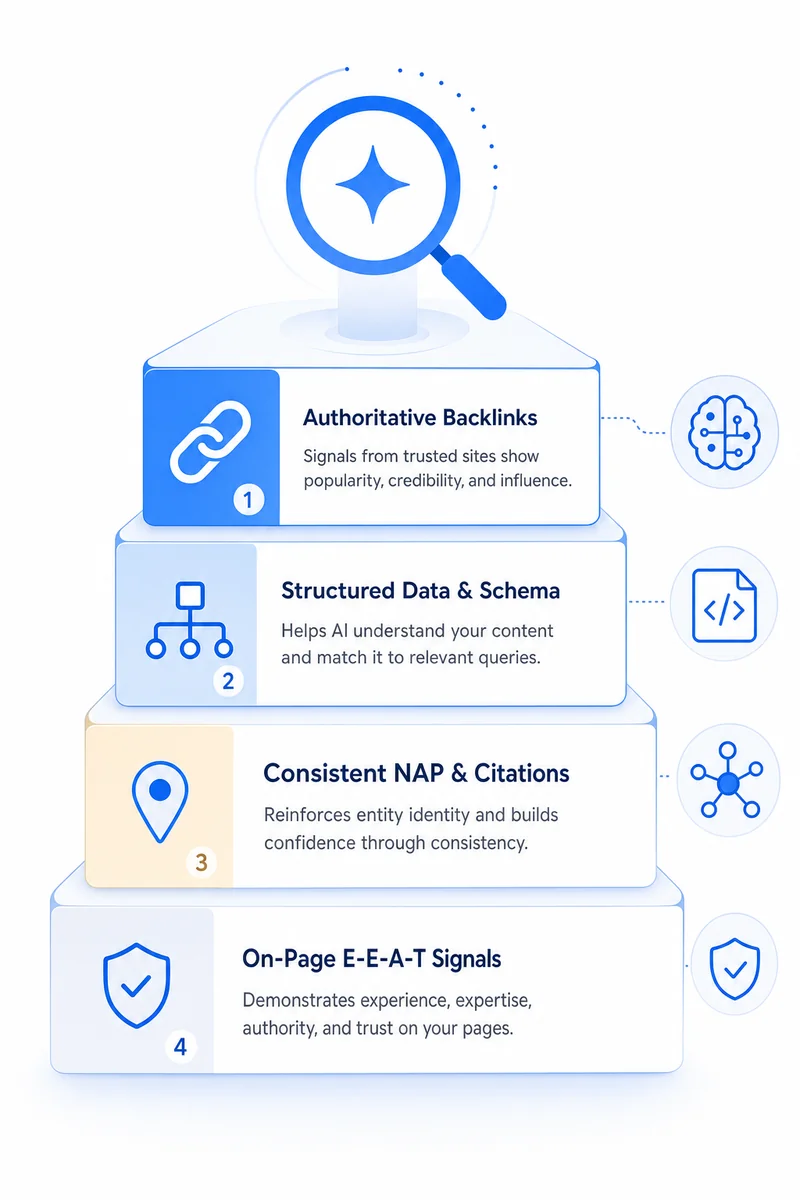
Shops that sell one package to every trade stop at step 5 and hope for the best. Step 2 and step 11 separate guessing from proving. To the measure brand visibility in chatgpt guide accurately, you need query-level scoring across all 5 engines, not a share-of-voice number.
Because the directories ChatGPT pulls from in your niche don't list you. ChatGPT doesn't invent names. It cites a fixed source pool: Yelp, Angi, BBB, HomeAdvisor, Thumbtack, Houzz, Nextdoor, Reddit threads, and trade aggregators. If competitors are on 9 of those and you're on 2, you stay invisible. The fix is reverse-engineering: query ChatGPT in customer voice, log every cited domain, register on each that appears 3+ times. Most clients see a first citation within 30 to 45 days.
To increase visibility in ChatGPT searches, start with the three sources it cites most for your trade in your city, get listed on them, and check again in a month. The same fix increases visibility in other AI search engines, because they read many of the same sources.
Three plays, ranked by 90-day impact. Directory reverse-engineering and submission delivers the biggest jump. Schema deployment is next, because engines extract structured content first. Q&A and stat blocks under existing H2s drive the third. Everything else compounds slowly and matters more once these three are done.
Or runs denvergaragedoor.com. He had 13 Google reviews against a competitor with 253. By every traditional model, he should have stayed buried.
I ran reverse-engineering on his market: twelve customer-style ChatGPT queries about garage doors in Denver, Aurora, and Lakewood. ChatGPT pulled from 9 directories plus 3 niche publications; Or was on 2. Within 14 days I registered him on all 9, then submitted him to the 3 publications; two accepted. At week 6 his name appeared in 4 of 12 answers; by month 4, 9 of 12. The Google side moved in parallel because the infrastructure overlapped: the same NAP work helped the local pack, the same schema deploy helped AI Overview. Our generative engine optimization approach powers both channels from one build.
Four concepts decide whether you appear in AI answer engines and in the AI responses customers read. Miss one and the rest of your effort goes to waste.
ChatGPT. Largest user base. Browse mode uses live search; non-browse uses the training cutoff. For browse, register on cited directories; for non-browse, build long-term mention consistency.
Perplexity. Source-transparent, so you see every source it used. Missing from Perplexity almost always means missing from ChatGPT for the same query.
Reddit threads show up often in AI answers for "who should I hire" questions. You cannot buy your way in, and posting ads there backfires. What works: answer real questions in your city's subreddit under your own name, and ask happy customers to mention you when a thread asks for recommendations. Treat it as a source, not a channel.
Gemini. Tied to Google's index and YouTube. A weak Google Business Profile or no YouTube presence means it under-cites you.
Authority. The composite signal engines use to decide if you're real: named author, real client URLs, cited sources, schema, update dates, consistent NAP across 25+ directories. The best ChatGPT SEO tracking tool covers Gemini citations too. Authority isn't a score; it's a pattern of structured proof.
| Channel | Time to first lead | Compound effect |
|---|---|---|
| Paid ads (Google Ads, LSA) | Same day | None, stops with budget |
| GBP optimization only | 30 to 60 days | Medium, easily lost |
| Traditional SEO | 90 to 180 days | High, compounds for years |
| AI engine optimization (GEO) | 30 to 45 days | Very high, first-mover edge |
| HouseCall combined stack | 30 to 60 days | Google + 5 AI engines |
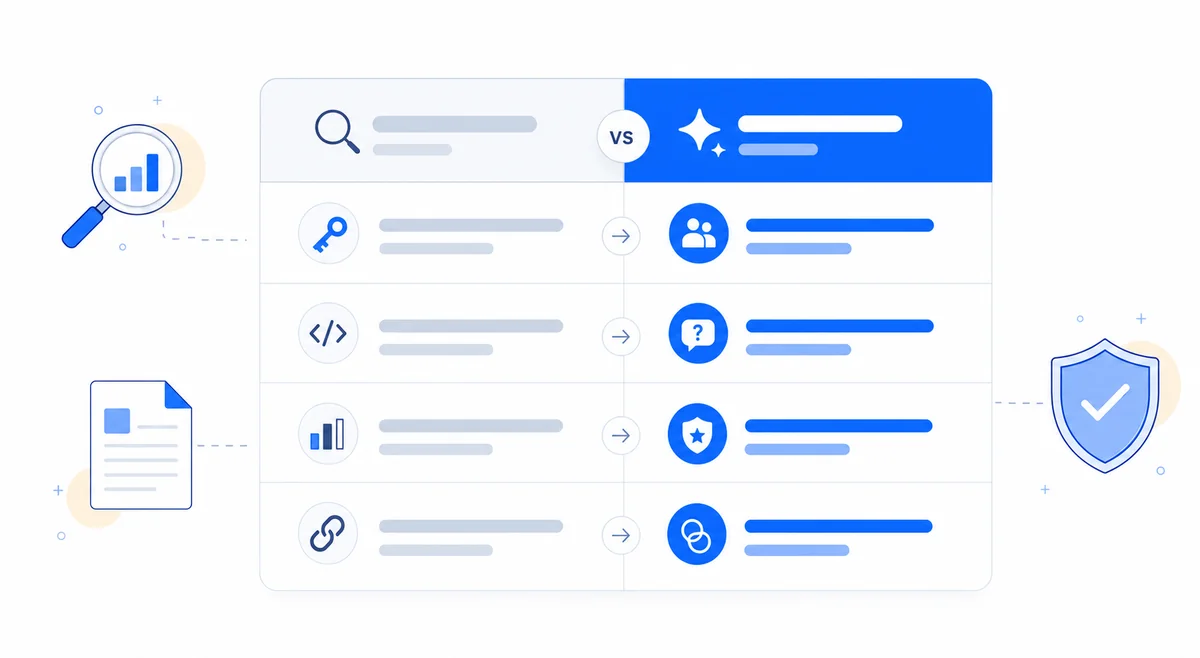
The combined stack wins on compound effect because the infrastructure overlaps. You build NAP, schema, E-E-A-T, and content once, and it serves Google plus all 5 AI engines.
| Tool | Purpose | Worth it? |
|---|---|---|
| Perplexity Pro | Source-transparent reverse-engineering | Yes, best for step 2 |
| Google Search Console | Track what AI Overview cites | Mandatory |
| Bing Webmaster Tools | Submit sitemap to Copilot | Mandatory |
| BrightLocal | Bulk directory submissions | Yes for 30+ directories |
| Screaming Frog | Technical site crawl | Pays for itself fast |
| SEMrush / Ahrefs | Traditional rank tracking | Fine for Google, skip for AI |
| Jasper / Copy.ai | AI writing | No, engines de-rank it |
| HouseCall internal tracker | Multi-engine citation tracking | Included, no public version |
I use AI as a research and structuring aid; final writing is human. To track your AI search visibility properly, you need query-level granularity across all 5 engines, not one share-of-voice bar.
Treating AI engines as one channel. Each weights sources differently. A play that works for one won't move the others. Build for all 5.
Skipping reverse-engineering. Most "GEO experts" jump straight to writing. Without knowing which directories your model cites, you're guessing. It takes 90 minutes and decides citation versus silence.
Using AI to write the content. Jasper and Copy.ai produce text engines actively de-rank. Use AI for research; keep the writing human. Being named in an AI answer instead of listed in ten blue links is the whole shift, laid out in my 2026 guide for local businesses.
No tracking deliverable. Selling AI-GEO without monthly query-level scoring is selling fog. If you can't show the citation rate moving, the work didn't happen.
Buying volume from a bad-faith vendor. "5000 blog posts, $99/mo" is a manual action waiting to happen. I cover the red flags in questions to ask an SEO agency.
Brand messaging is the consistent set of claims, named entities, and proof points across every public touchpoint. It matters because engines look for repetition across independent sources. If your home page says "family-owned since 2008, serving Denver and Aurora" and your Yelp listing says "established 2010, Denver only," the model flags the conflict and de-weights both. Consistent messaging across your site and 25+ directories builds the authority signal engines reward. Add press mentions when you get them.
Review count is overrated. Or had 13 reviews and beat a competitor with 253. Content depth, E-E-A-T, and citation infrastructure mattered more than the review gap.
Directory submission labor is what nobody wants to do. Reverse-engineering takes 90 minutes; submitting to 25 to 40 directories with identical NAP takes 8 to 15 hours. Vendors who outsource it offshore get the NAP wrong. We do it in-house.
AI engines reward being boring. Specific, verifiable, cited, dated, linked to real clients. The pages that perform aren't flashy; they're accurate.
No contract, cancel anytime. No ranking guarantees. See full package details for each tier.
Start with pages that already get Google impressions. Put a two or three sentence answer directly under each heading, replace vague claims with specific ones you can back up, add a visible "last updated" date, and link to your service and area pages. Do not rewrite a page that already ranks from scratch; tighten it.
Yes, but only with multi-engine query-level workflows. SEMrush and Ahrefs don't show what's asked inside ChatGPT or Perplexity; their data is Google clickstream. You have to run real queries against real engines on a schedule. The HouseCall internal tracker runs 5 engines monthly on 20 to 50 queries per client and scores presence, position, and source.
AI search monitoring tools tell you which queries cite you, which competitors take your share, and where to fix gaps. Without them, you're guessing. Tools that only score "share of voice" are too coarse. The right one gives 5-engine coverage, query-level granularity, source attribution, and monthly refresh at minimum.
To compare AI search optimization tools, score five axes. Engine coverage: 5 or 1? Query-level granularity: 50 specific queries or general "share of voice"? Source attribution: which source got cited? Refresh: monthly minimum. Cost: under $50/mo is usually thin, over $500/mo usually padded. Most claim AI coverage but run Search Console data with a new label.
HouseCall SEO pricing starts at $750/mo Starter, $1,500/mo Pro, and Custom from $2,500/mo. No contract. An agency with no tracking deliverable is overpriced at any price.
Most home-service clients see first AI citations within 30 to 45 days of completing directory submissions. Or's Denver account hit ChatGPT citation at week 6. Tomer at Pine Garage Doors took 8 weeks in a tougher niche. Speed depends on niche, city density, and existing directory coverage.
Usually because the sources those engines read do not mention you. ChatGPT and Perplexity cite directories, review sites, trade publications and pages that answer the exact question. If your name is missing there, or your site has no direct answers, the engine names someone else. Check which sources it cites for your questions, then get listed on them.
Perplexity Pro shows which sources an answer used. Google Search Console and Bing Webmaster Tools show what gets indexed. BrightLocal handles directory submissions and Screaming Frog checks the site. For tracking, Otterly.ai, Knowatoa, Athena HQ and Profound monitor mentions across ChatGPT, Gemini and Perplexity.
Most trackers show where you appear but not why. The useful workflow pairs a tracker with citation reverse-engineering: run the customer questions, list every source each answer cites, and compare that with where your brand is listed. The gap is your action list. I run that on every retainer.
Three things: be listed on the sources the engines already cite, publish pages that answer the exact question in the first sentences, and keep your name, address and details identical everywhere. Or at Denver Garage Door reached 9 of 12 ChatGPT answers by month four with that approach.
Write down the questions your customers really ask, run them in ChatGPT, Perplexity and Gemini, and note who gets named. For each question, publish a section that answers it directly and get listed on the sources cited. Rerun the same questions every month, because the answers change.
AI search engines run web searches behind the scenes and cite what ranks. Pages that rank on Google and Bing, load fast, use clear headings and schema, and answer questions directly are the ones pulled into answers. Good SEO is most of the groundwork for AI visibility.
AI answers repeat what reviews and articles say about you. Ask happy customers for detailed reviews, reply to negative ones calmly, fix outdated or wrong details on directories, and publish clear pages about your services and prices. Sentiment shifts as those sources change.
No tool edits an AI answer directly. You correct the sources it reads: directory listings, your Google Business Profile, your About page and your schema. Once those agree, the answers usually follow. I keep a ground-truth file for each client and check the answers against it every month.
Run the questions your customers ask, and list which competitors get named and which sources ChatGPT cites for them. Get onto those sources, publish direct answers to the same questions, and collect reviews that mention your service. Then count how many answers name you each month.
The best ways to improve brand visibility in AI search results: directory reverse-engineering across all 5 engines, schema deployment, Q&A and stat-block rewrites, E-E-A-T buildout, niche outreach, and monthly tracking. Pick an agency that does all of it and prices transparently. That is how I run HouseCall SEO. Anyone selling "GEO packages" with no source attribution or tracking is selling fog; the boutique SEO agency criteria page covers what to ask.
I run the reverse-engineering process during the free audit. You see the exact directories AI engines cite in your niche, which ones you're on, and which ones competitors use. You get the source list and the exact gaps, not a slide deck. I'm Lior Daniel, I do this work directly for every client, and I've done it for 6+ years. Book a 30-minute call, or get the free 24-hour audit in writing.

I specialize in home services SEO: taking websites that sit invisible on page three and turning them into the business Google and ChatGPT recommend first. I started on the developer side, writing software and doing SEO on the side, until I saw how much home-service owners were overpaying for work that quietly hurt them. So I built a method that fixes the broken technical work and the outdated thinking behind it.
From garage door companies to plumbers, roofers, locksmiths and cleaning services, the playbook is the same: rank where your customers actually search, earn real reviews, and back it with a fast site that books the job. No PBNs, no bought reviews, no directory spam. Only work that survives Google’s next five updates. See exactly how it’s priced on the pricing page.
Free 30-minute strategy call