Last quarter my client Or at denvergaragedoor.com beat a 253-review competitor with 13 Google reviews using the best ai search optimization tool with chatgpt integration we could build in-house. He won because we treated AI engines like research librarians, not slot machines. That is the entire game.
The best AI search optimization tool with ChatGPT integration is a workflow, not software. It combines on-page Generative Engine Optimization (GEO), citation reverse-engineering across AI engines, structured Q and A content blocks, and monthly tracking inside ChatGPT, Perplexity, Gemini, Claude, and Google AI Mode. No single SaaS does this end-to-end. Real results come from running the process by hand. The best ChatGPT SEO tracking tool is still a human auditor reading AI responses and mapping source patterns.
People want a tool because tools feel safe. You log in, you see a green checkmark, you feel like something is happening. AI search does not work that way. ChatGPT pulls from training data, Bing index snapshots, real-time web browsing, and a short list of trusted third-party sources. A dashboard cannot fix the fact that you are missing from those sources.
If you still want software, these are the ones worth a trial. Otterly.ai and Knowatoa track whether ChatGPT names you on a set list of prompts and are priced for small teams. Athena HQ and Profound cover more engines and are priced for brands with a content team. SE Ranking and Semrush have added AI modules to their rank trackers. All of them measure. None of them gets you listed on the sources ChatGPT reads, which is the work that moves the number. I compare prices and gaps in my ChatGPT SEO tracking tools review.
Five engines matter for home-service businesses in 2026: ChatGPT, Perplexity, Gemini, Microsoft Copilot, and Google AI Mode. Each pulls sources differently, and that difference is where most AI SEO tools fail. Most AI search optimization tools for content creators rarely account for local intent or niche-specific citation patterns, which is a real gap for contractors.
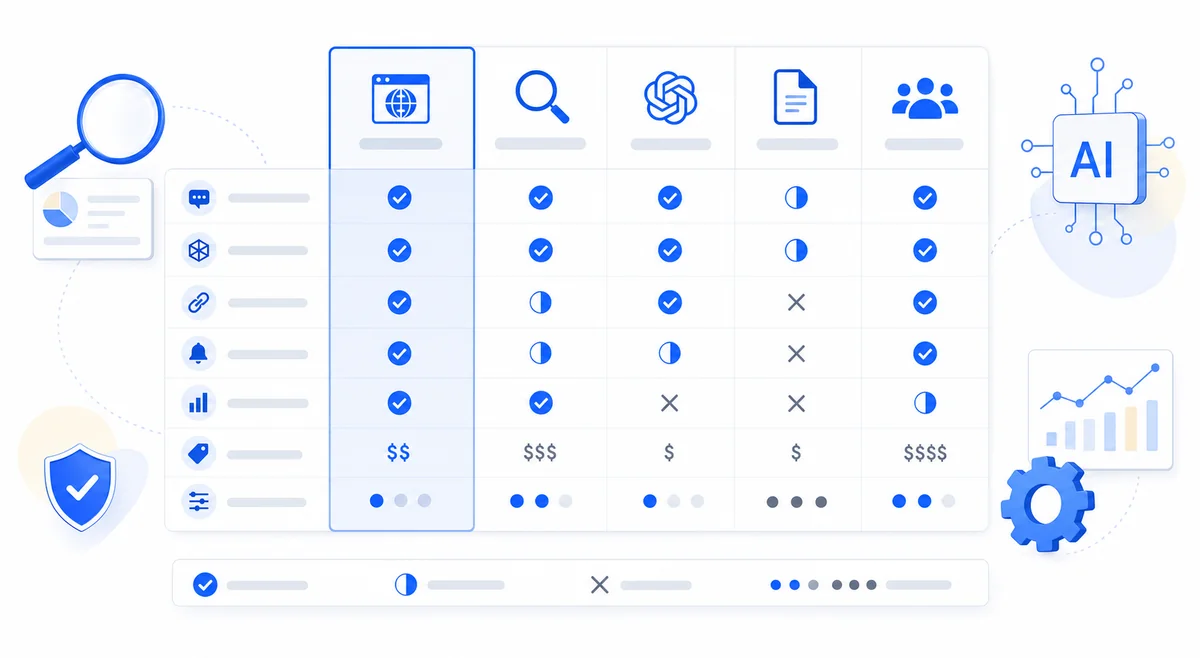
ChatGPT pulls from its training corpus, Bing web search when browsing is active, and the ChatGPT Search index, which favors structured data and domains cited elsewhere. Perplexity cites sources with numbered footnotes and favors recent content with Q and A blocks. Gemini and Google AI Mode share Google's index and prefer clear answer paragraphs near the top of the page. Copilot runs on Bing with extra weight on Bing Places listings. Bing gets ignored by almost every shop that focuses only on Google. That is a gap if you are paying attention.
Or described his best customers perfectly: they ask ChatGPT for a garage door company in Denver, get three names, then Google those names to verify. Whichever company shows up cleanly in both places gets the call. I call this the Trust Stack. Ranking in Google alone is half the story. Ranking in ChatGPT alone is the other half. Ranking in both means the homeowner finds you on Google and hears your name from ChatGPT, giving them two trust signals in a single search session instead of one. That single observation drives every page we ship. It is the same idea behind my local SEO for contractors work.
Build your Google ranking and your AI citation presence in parallel: the same content and schema that earns a Google position also feeds ChatGPT and Gemini. That means consistent brand visibility across AI search engines is not a separate project; it is the same project, run smarter.
The technique no SaaS will sell you: open ChatGPT, Perplexity, and Gemini, run the exact queries your customers ask, and read the footnotes. For Or, that meant "best garage door repair company in Denver" and twelve variations. It works the same for any trade; I use it in garage door SEO and SEO for roofing companies. Perplexity makes source-tracing easy. You will see the same three or four directories appear every time: Yelp, Angi, HomeAdvisor, BBB, a local news article. Register on every source the AI trusts. The principle is direct: the more credible sources mention you, the more likely the engine surfaces you. We document the process inside our Google Business Profile optimization guide. Paid tools tell you what to write. None tells you where the engines are looking in your city right now.
When a homeowner asks ChatGPT for "a garage door company near me", it recommends a few names. To be one of them, three things have to line up: your business is listed, with the same name, address and phone, on the directories and review sites ChatGPT cites for that question; your own site states plainly what you do, where, and for whom; and other sources repeat it. A tool can show you when you are missing. Fixing it is listing work and writing work.
Every major section should open with a 60 to 100 word paragraph that answers the heading's question directly. AI engines extract these almost verbatim. Specific numbers paired with named sources are citable in a way generic claims never are. Comparison tables are extracted cleanly. Explicit Q and A blocks with three to five sentence answers are the format ChatGPT, Perplexity, and Gemini prefer. Semantic variation matters too: models score for depth and reward synonyms, related concepts, and named entities. Repeating the same phrase 30 times reads as spam.
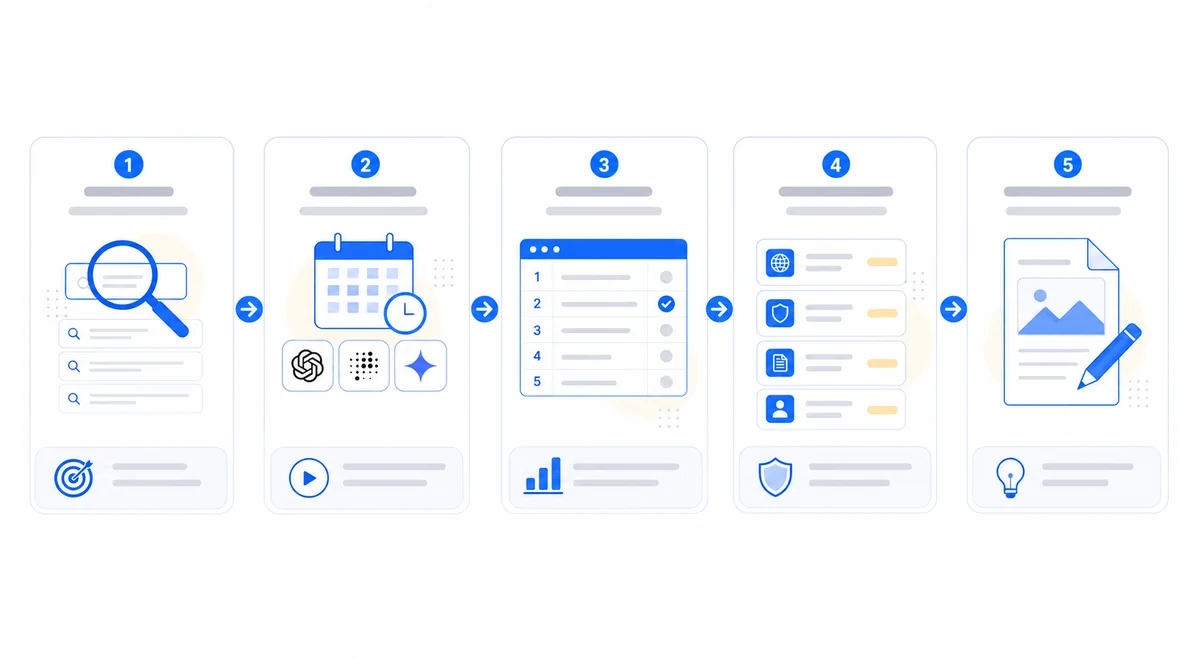
Four phases, run in order.
Phase 1 is the audit (two weeks): citation reverse-engineering across your top 20 queries on all five engines, schema and indexing gaps identified, baseline citation count logged. Phase 2 is the fix (three to four weeks): technical gaps closed, homepage and top three money pages rewritten with AI-citable structure, FAQ schema deployed. Phase 3 is the build (months two through six): service pages, neighborhood pages, city pages, and comparison guides, all built around real customer questions and the directories AI engines surface. Phase 4 is tracking, monthly for the life of the engagement: citation rate, position inside the AI answer, and comparison against baseline ship in every monthly report.
Google Business Profile feeds Google AI Mode, Gemini, and indirectly the data other engines crawl. Four mistakes block AI citations on almost every contractor profile I audit: hiding the address in a service-area listing that drops the profile out of the local pack; keyword-stuffed service entries that Google ignores or flags; the wrong primary category, which is the single biggest GBP ranking signal; and a business name that reads like spam. Names matching the legal entity win. That is also the best fraud defense.
We run a manual tracker once a month against every client's target query set, 20 to 50 queries per client depending on tier. The tracker hits ChatGPT, Perplexity, Gemini, and Claude, captures answer text, and parses for three signals: direct citation (did the engine name the client?), source mention (did it pull from the client's site?), and competitive position (where in the list?). The monthly report compares against prior month and baseline. A report line reads like "cited in X of 20 queries on ChatGPT, up from Y last month." That is what real progress looks like. You can pair this with the best ChatGPT SEO tracking software options we review separately, though most clients find the manual audit gives sharper insight.
The real stack: Google Search Console, Bing Webmaster Tools (because Bing feeds ChatGPT and Copilot), the free interfaces of ChatGPT, Perplexity, Gemini, and Claude for citation auditing, Screaming Frog for technical audits, Looker Studio for reporting, and our internal monthly AI citation tracker. SEMrush and Ahrefs are useful for backlink intelligence, but their keyword volumes do not reflect conversational AI search queries. Surfer SEO and Clearscope push everyone toward the same page, and generic content is what AI engines skip when picking a citation. AI generators like Jasper produce volume with no angle. We use AI for outlining and first-draft scaffolding, never as the final voice.
No contract, cancel anytime. I do not guarantee rankings.
For a plain-language conversation about which tier fits your business, the free tier-matching call is the right next step. No pitch deck, no pressure.
The tools worth comparing monitor whether your business name appears inside AI-generated answers, beyond content scores or keyword rankings alone. For home-service businesses, the realistic stack is Google Search Console for query data, a manual citation audit each month, and Screaming Frog for technical gaps. Paid SaaS tools are a sanity check, not a substitute for the underlying process.
Three questions: Does the tool show which sources AI engines cite in your niche, or just abstract scores? Does it track citation rate across multiple engines? Is the data fresh? Most paid tools fail at least one. For home-service businesses, an agency running the process by hand will usually outperform a SaaS subscription because the work is qualitative.
SaaS tracking tools are billed monthly and only measure. Our Starter tier is $750 a month, Pro is $1,500 a month, and Custom engagements start at $2,500 a month. Anyone selling AI ranking for under $500 a month cannot do the citation reverse-engineering, content production, and monthly tracking sustainably at that price.
Look for tools that show which sources AI engines actually cite in your niche, track citation rate across at least four engines with fresh data, and pipe the gap list into your content calendar. Avoid anything that promises to rank you in ChatGPT through technical settings alone. Integration with GSC, GA4, and GBP matters so AI data lives in the same reporting stack as your traditional SEO numbers.
AI SEO, also called Generative Engine Optimization, targets citations inside AI-generated answers rather than blue links on a results page. The foundation overlaps with traditional SEO: clear writing, real authority, fast pages, structured data. The differences are in source preference, content structure, and measurement. AI engines reward Q and A blocks, named sources, structured tables, and presence on the third-party directories they trust. Traditional SEO rewards depth, E-E-A-T, and backlinks.
Yes. You need 8 to 12 hours a month and the discipline to run the same process every month. The citation reverse-engineering pass alone takes a full afternoon. If you have the time and the writing skill, the playbook on this page is the playbook. If you would rather hand it off, that is what we do.
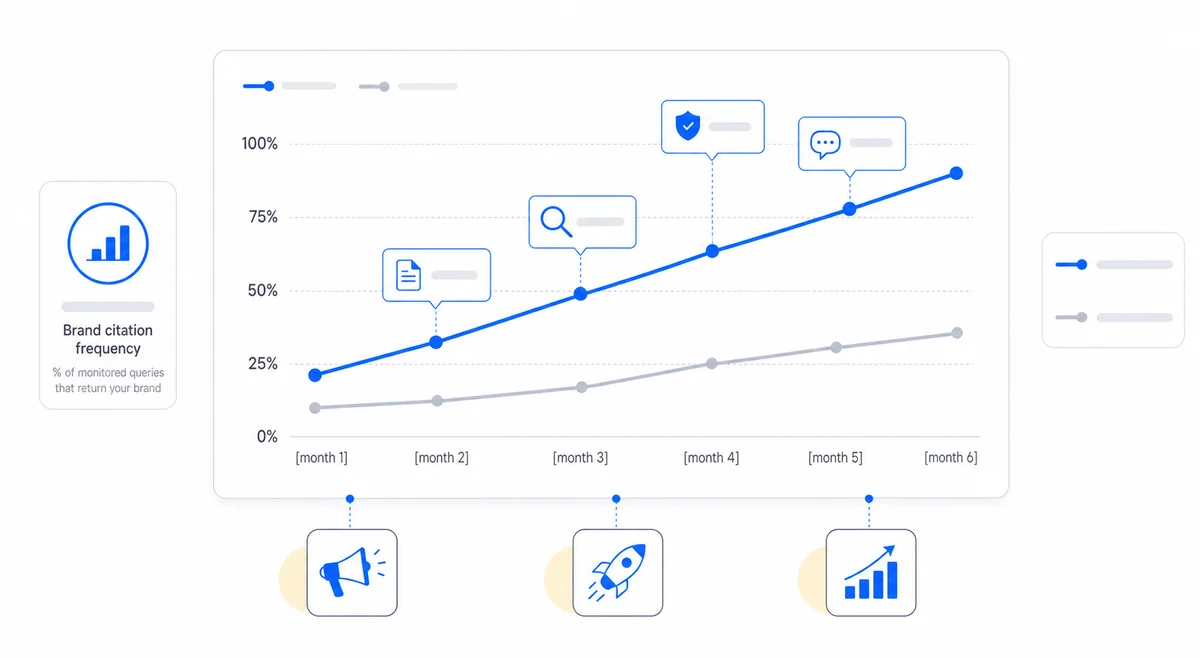
First signals show up in 30 to 60 days. Schema, GBP fixes, and the first citation reverse-engineering pass can move the needle inside the first monthly report. Compounding gains arrive in months three through six. By month six you should see measurable lift in AI citation rate and Google rankings together. That is the Trust Stack in action.
I am Lior Daniel, founder of HouseCall SEO, software developer and SEO specialist with 6 years of experience, formerly with government and airline-sector organizations. My focus is AI-engine optimization for home-service businesses across the US. I do the work directly.
The best AI search optimization tool with ChatGPT integration is a discipline, not a download. The next move is to see where you stand right now. We will run the citation reverse-engineering pass on your top 20 customer queries, audit your GBP, and show you the three biggest gaps in your AI visibility.
Book a 30-minute call and I will run the source check on your top customer questions first. Prefer it in writing? Get the free 24-hour audit.

I specialize in home services SEO: taking websites that sit invisible on page three and turning them into the business Google and ChatGPT recommend first. I started on the developer side, writing software and doing SEO on the side, until I saw how much home-service owners were overpaying for work that quietly hurt them. So I built a method that fixes the broken technical work and the outdated thinking behind it.
From garage door companies to plumbers, roofers, locksmiths and cleaning services, the playbook is the same: rank where your customers actually search, earn real reviews, and back it with a fast site that books the job. No PBNs, no bought reviews, no directory spam. Only work that survives Google’s next five updates. See exactly how it’s priced on the pricing page.
Free 30-minute strategy call