
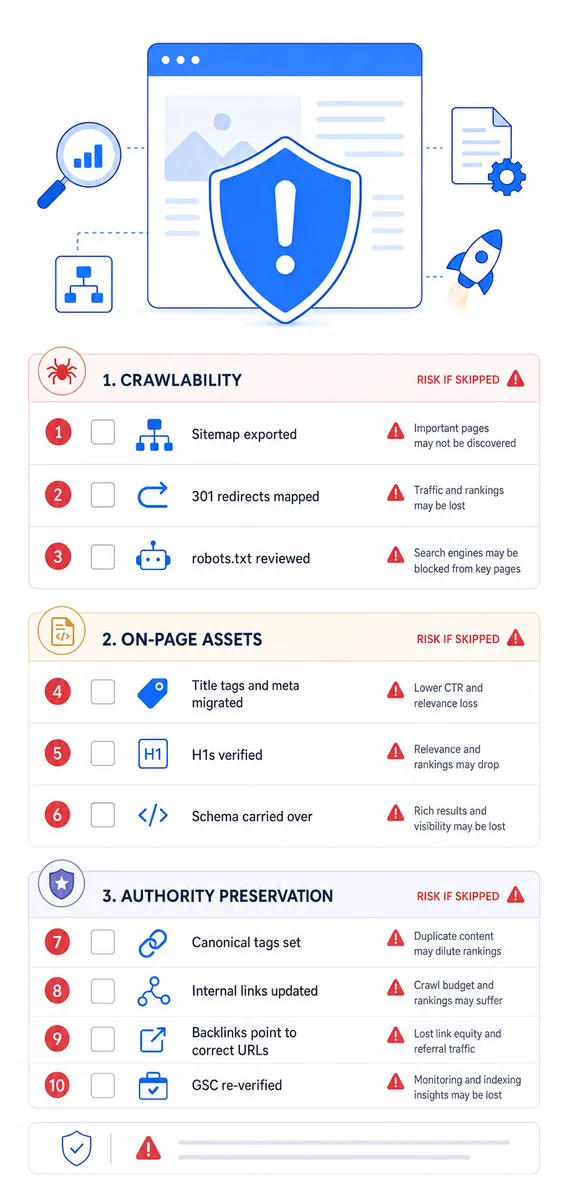
A website redesign checklist is the 50-point migration list that keeps SEO traffic alive when you rebuild a site. It covers pre-launch (audit, 301 map, schema plan), launch day (DNS, GSC submission, canonical sweep), and post-launch (index coverage, Core Web Vitals, AI citation tracking). Skip it and a redesign drops 30 to 70 percent of organic traffic within two weeks. Run it with one team owning both visual and SEO, and the redesign adds traffic rather than spending the next six months recovering it. Linoy at SASS Facial Spa ran this exact list moving from Squarespace to WordPress. Zero traffic loss. Our contractor website design SEO runs this checklist on every build we touch.
A website redesign checklist is a written, dated list of every SEO-critical task that must finish before, during, and after a site rebuild. Most contractors learn the term after they already lost traffic. The average post-redesign traffic drop is 40 to 60 percent in the first 60 days. Half of those sites never recover baseline. Redesigns that ran a written checklist held within 5 percent of pre-launch traffic and surpassed it inside 90 days. Running the checklist is what separates a clean launch from a six-month recovery.
A refresh changes paint. A redesign changes plumbing. The SEO risk differs by an order of magnitude.
| Aspect | Refresh | Redesign |
|---|---|---|
| URLs | Stay the same | Often change |
| CMS or stack | Same platform | Often new platform |
| Schema markup | Adjust existing | Rebuild from zero |
| SEO risk | Low, days to recover | High, months to recover |
| Checklist needed | 10 to 15 points | 50 points minimum |
Linoy's SASS Facial Spa rebuild was sold to her as a refresh. The platform and URL pattern were both changing. That is a full redesign and needs the full list.
For a home service business with 20 to 60 pages, expect 8 to 14 weeks. Discovery and audit: 1 to 2 weeks. URL planning: 1 week. Design and content: 3 to 6 weeks. Build: 2 to 4 weeks. Pre-launch QA: 1 week. Post-launch monitoring: 4 to 8 weeks. Anyone selling a 2-week redesign is selling a refresh or skipping the checklist entirely.
| Tool | Phase | What it does | Cost |
|---|---|---|---|
| Screaming Frog | Pre, post | Full crawl, redirects, canonical and meta audit | Free under 500 URLs |
| Google Search Console | All | Coverage, performance, URL Inspection, sitemap | Free |
| Google Analytics 4 | Pre, post | Landing pages, conversions, traffic baseline | Free |
| Ahrefs | Pre, post | Backlink profile, broken link check | Paid |
| Lighthouse / PageSpeed Insights | All | Lab CWV scores, opportunities | Free |
| Rich Results Test | Launch | Schema validation per template | Free |
| CallRail | All | Call tracking, proof of lead recovery | Paid |
I have audited 30-plus redesigns where rankings collapsed. The same six mistakes show up in 90 percent of them.
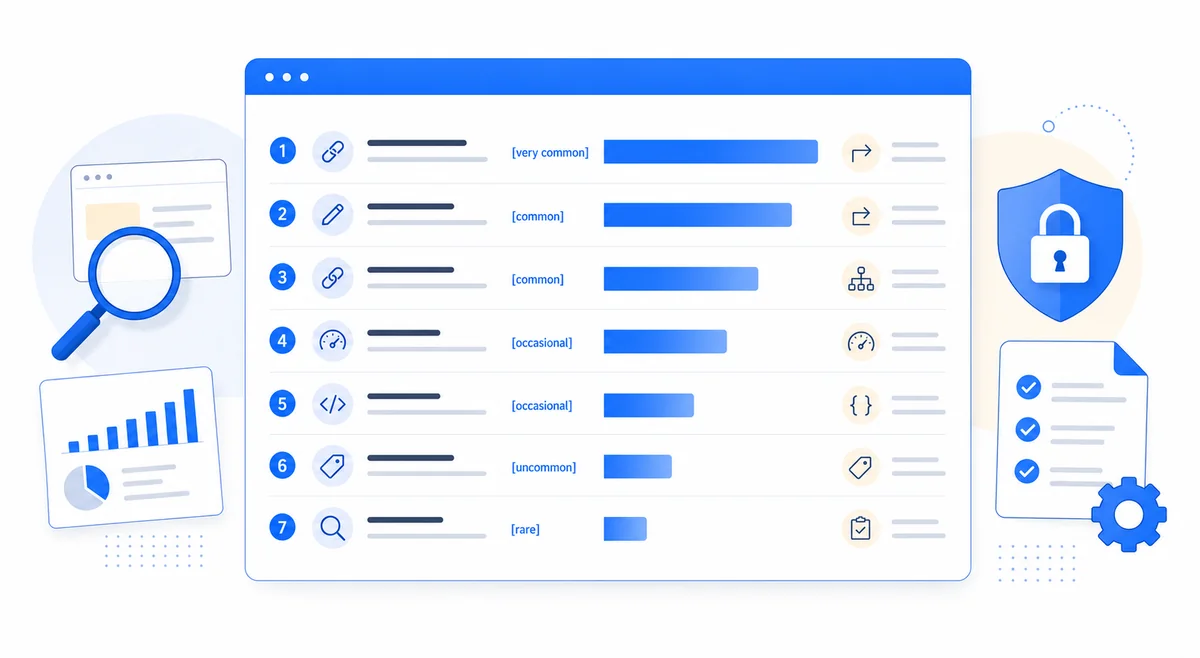
Linoy runs SASS Facial Spa in Sarasota, Florida. Squarespace site sold as a "refresh." Platform was changing, URL pattern was changing, and the prior agency ran zero redirects. Twelve pages earning any clicks per month, mobile LCP at 4.2 seconds, zero schema blocks.
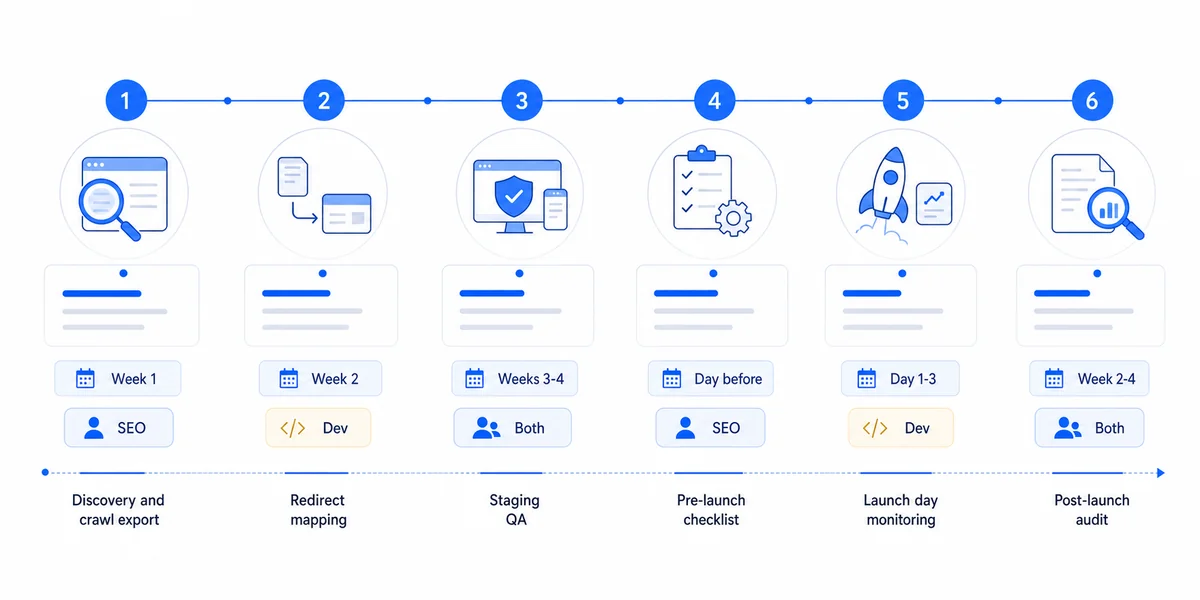
We ran the full 50-point checklist. Pre-launch: 280 URL map, 301 coverage, title and meta export, WordPress with SSR nav. Launch: 4 hours. Two issues caught and fixed before hour three. Zero traffic loss. By day 60, mobile LCP at 1.4 seconds and schema live on every template. By day 90, ChatGPT was citing her for facial treatment queries in Sarasota.
| Approach | Traffic loss | Recovery time | Cost |
|---|---|---|---|
| No checklist, in-house dev | 40 to 70 percent | 6 to 18 months | Variable, cheap upfront |
| Generalist agency, light checklist | 20 to 40 percent | 3 to 9 months | $15k to $40k |
| Specialist with full 50-point list | 0 to 5 percent | Recovery not needed | $10k to $30k |
If the site earns 1000 leads per year and the redesign drops 50 percent of organic for 9 months, the business loses 375 leads. At $200 average lead value: $75,000 in lost revenue. The checklist pays for itself in week one.
The 2019 website redesign checklist was 25 items, mostly local citations and GBP. The 2026 list is 50 items, half of them about AI engines, schema, and SSR. AI engines prefer SSR with semantic HTML, quote stat-rich Q-and-A blocks, and need schema to disambiguate entities. A redesign that ranks on Google but stays invisible to ChatGPT is half-built in 2026. Or in Denver runs 13 reviews against a competitor with 253 and wins more commercial installs because content depth, schema, and AI citations outweigh review count. The redesign is the moment to build the depth competitors cannot copy.
A pre-redesign site loses customers through four patterns: mobile load time over 3 seconds, JS-only navigation, missing tap-to-call, and missing schema that hides the site from ChatGPT. If any two apply, you are losing leads daily. Linoy's bounce rate dropped from 68 percent to 41 percent inside 60 days after the rebuild.
Content migration is the most under-budgeted phase. Forty percent of pages need rewriting, 30 percent need merging, 20 percent should retire. Run a content audit before the build. Carrying deadweight into the new site makes it read as thin to Google.
GA4 must fire on every template from minute one. Install via Google Tag Manager, verify with DebugView on staging, smoke test on production within hours of launch. Linoy's GA4 fired inside hour one. Two weeks later the data confirmed traffic recovery against the baseline.
Review count is overrated. Or beats a 253-review competitor with 13 reviews because content depth and schema outweigh review count. If your redesign agency obsesses over reviews and ignores schema, they are optimizing the wrong variable.
Most SEO tools mislead during redesigns. SEMrush and Ahrefs cannot tell you what ChatGPT is citing. Surfer SEO pushes every page toward the same formula. I use AI to draft and accelerate; I never ship AI-generated final copy.
Most top 10 SEO blog advice about redesigns still quotes 2019 playbooks. The agency that hands you a 2019 checklist will rank your site in 2019 and invisible in 2026. A proper website redesign SEO checklist accounts for AI engines.
A structural rebuild of a site that changes platform, URL pattern, design system, or all three. It differs from a refresh, which keeps the platform and URLs and only changes visuals. The redesign carries SEO risk because URLs, schema, and canonical signals change simultaneously.
For a 20 to 60-page home service site, expect 8 to 14 weeks total. Discovery (1 to 2 weeks), URL planning (1 week), design and content (3 to 6 weeks), build (2 to 4 weeks), QA (1 week), post-launch monitoring (4 to 8 weeks). A 2-week timeline is a refresh, not a redesign.
$8,000 to $40,000 total for a home service business. Our Starter is $750 per month, Pro is $1,500, Custom starts at $3,000 monthly. Hidden agency pricing adds 30 to 50 percent on top of quoted fees.
CTR shifts in 2 to 4 weeks. Indexation fixes in 7 to 14 days. Schema and Core Web Vitals in 30 days. Full ranking and AI citation recovery in 60 to 120 days. A clean checklist keeps the dip under 5 percent.
Verify with a Domain property, add both www and non-www, submit the new XML sitemap within the first hour of launch, and run URL Inspection on the top 50 URLs.
Yes. A custom 404 must return a real 404 HTTP status, link to the homepage and top 5 service pages, and include site search. Noindex the 404 page itself.
Run the 50-point list against your current site. Under 30 points means the redesign needs the full checklist. Book a free SEO consultation and we walk the list with you in 48 hours.
If the redesign is in planning, start with the technical SEO audit service to baseline the current site. If the site already launched and traffic is sliding, the how this works covers recovery. For one team on both build and SEO, the Ranking seo friendly web development companies covers that side.
Most home service contractors lose ranking in a redesign because nobody owned the checklist. I am Lior Daniel, founder of HouseCall SEO, software developer and SEO specialist for 6+ years, background at IDF Home Front Command and El Al's website. I write the code and run the SEO on the same project. Book a free SEO consultation and we map the 50 points against your site inside 48 hours.

I specialize in home services SEO – taking websites that sit invisible on page three and turning them into the business Google and ChatGPT recommend first. I started on the developer side, writing software and doing SEO on the side, until I saw how much home-service owners were overpaying for work that quietly hurt them. So I built a method that fixes the broken technical work and the outdated thinking behind it.
From garage door companies to plumbers, roofers, locksmiths and cleaning services, the playbook is the same: rank where your customers actually search, earn real reviews, and back it with a fast site that books the job. No PBNs, no bought reviews, no directory spam – only work that survives Google’s next five updates. See exactly how it’s priced on the pricing page.