
The best tools for local link building split into five jobs: backlink intelligence (SEMrush, Ahrefs), outreach automation (Pitchbox, GMass), contact discovery (Hunter.io), citation finders (BrightLocal, Whitespark), and a custom internal script. A working stack costs roughly $400 to $1200 a month by volume. The sequence is the same every time: find a competitor link gap, vet the domain, get the editor's verified email, pitch a real piece, earn the link. For on-site work, pair this with internal link building tools.
Local link building earns editorial backlinks from sites tied to a city, region, or trade. The supporting tools are not generic SEO software; local work needs geographic filtering, niche-edit prospecting, and citation auditing across geo-specific directories. A generic crawler says a competitor has 4000 referring domains; a local workflow narrows that to the 40 tied to your city and trade.
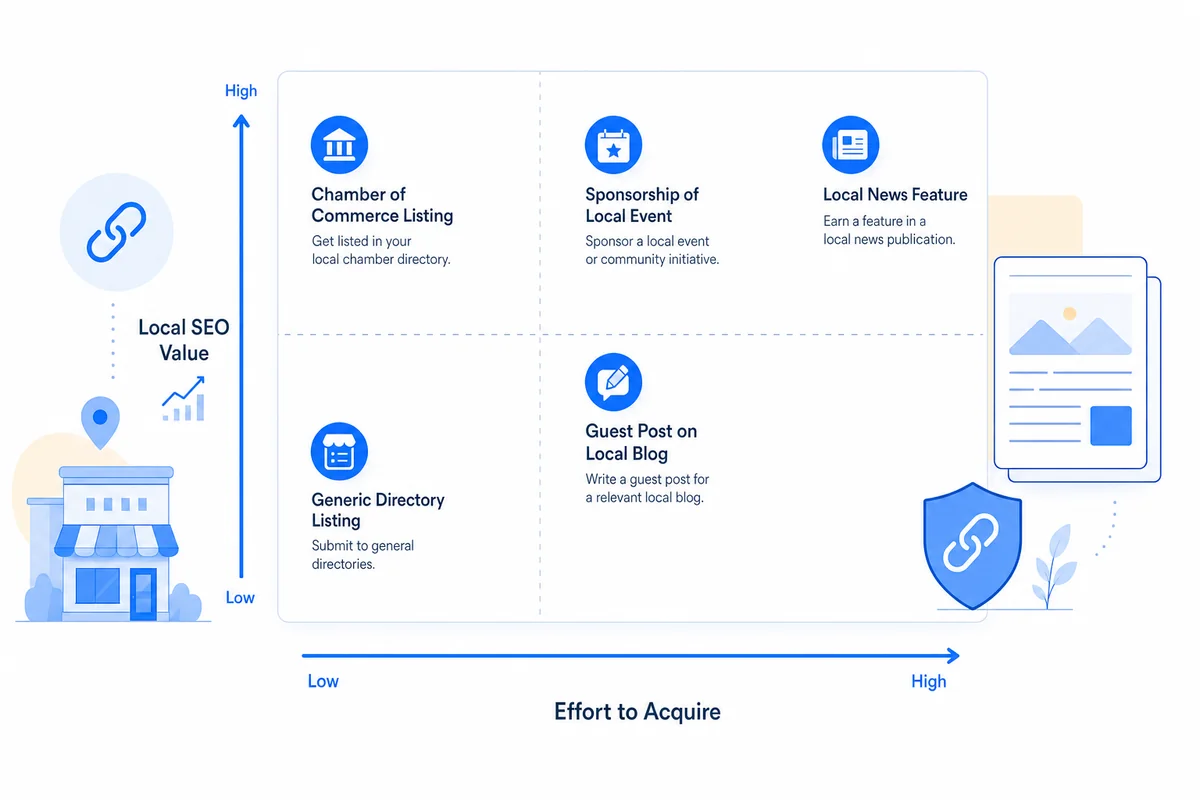
The market shifted between 2023 and 2026. Google keeps devaluing scaled link networks in its spam updates, and AI engines like ChatGPT and Perplexity now cite publications with real traffic while ignoring ghost sites, so a backlink serves two readers: Google's link graph and a customer reading the article. Generic "best tool" lists fail because they are written for SaaS marketers, not the plumber who needs the chamber of commerce site, so for the wider picture read local SEO for contractors.
Pricing reflects the plan I actually use, not the cheapest starter tier, and I flag where a free tier covers the same ground.
| Tool | Category | Plan | Monthly | Best for | Weakness |
|---|---|---|---|---|---|
| SEMrush | Backlink intelligence | Guru | $249.95 | Competitor link gap | Weak on regional sites |
| Ahrefs | Backlink intelligence | Standard | $249 | Live index, anchor text | Site Explorer credit caps |
| Pitchbox | Outreach automation | Pro | $495 | Sequences, team inbox | Steep curve, overkill solo |
| Hunter.io | Email discovery | Growth | $59 | Verified editor emails | Catch-all false positives |
| GMass | Outreach (Gmail) | Premium | $25 | Cheap Pitchbox alternative | Weak reporting |
| BrightLocal | Citation finder | Multi | $49 | NAP audit, GBP rank | Slow niche refresh |
| Whitespark | Citation finder | Pro | $58 | Niche directory discovery | Dated interface |
| Custom script | Internal tool | Python + Serper | $15-30 | Unlinked mentions | Needs dev maintenance |
| Search Console | Link verification | Free | $0 | Confirms indexing, decay | Sample data only |
Every tool here bills a monthly fee, annual billing is cheaper on most of them, and none of them builds a single link on its own.
Full-stack spend runs about $1200 a month, and I do not pay every tool for every client. A Starter client at $750/mo (5 backlinks a month) uses SEMrush, Hunter, GMass, BrightLocal, and the script; a Pro client at $1,500/mo (15 backlinks a month) gets the full stack including Pitchbox; Custom, from $2,500/mo, adds multi-location work. See how I price these on the SEO packages page.
Most link building tools charge a monthly fee, and the big ones cost more than a small contractor needs. If you are building your own local links, this is the affordable version:
What you lose on the affordable stack is competitor link data. Free tools show your own links, not the links your competitors have. That gap is what the paid tools charge a monthly fee for.
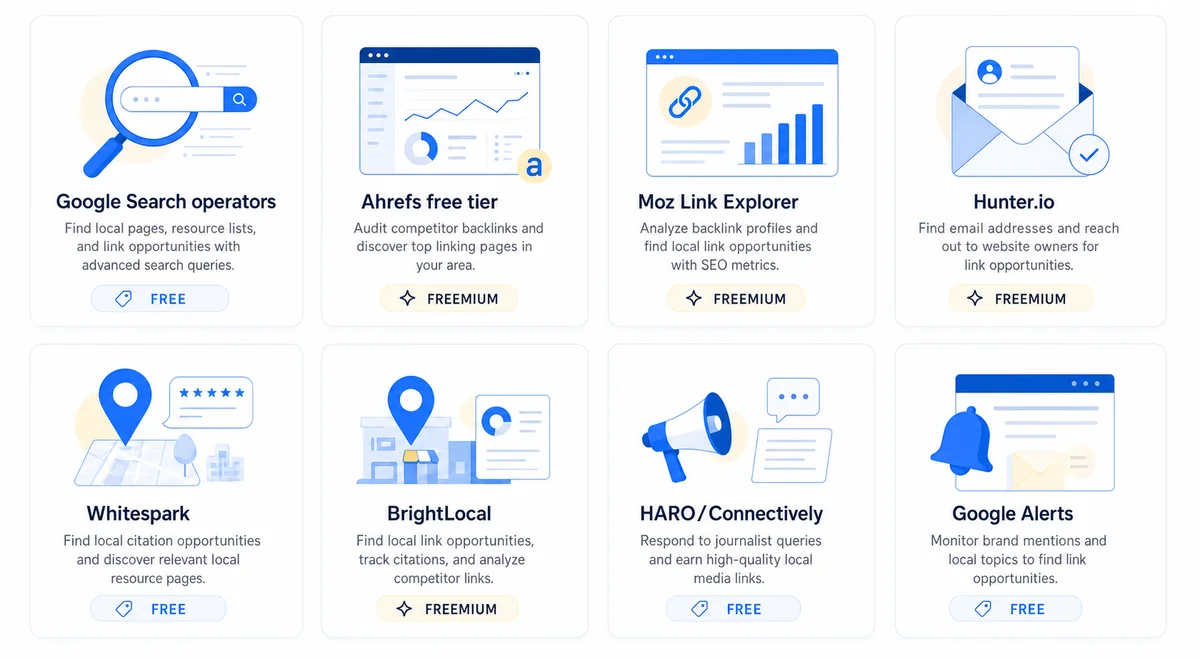
I pay for both SEMrush and Ahrefs because they index different parts of the web; both inflate keyword data, so I verify in Search Console rather than trust the scores, or lean on free Ahrefs alternatives. Pitchbox is the outreach standard above 100 emails a week but costs $495, so solo operators use GMass at $25, while Hunter.io verifies the editor's email before I send.
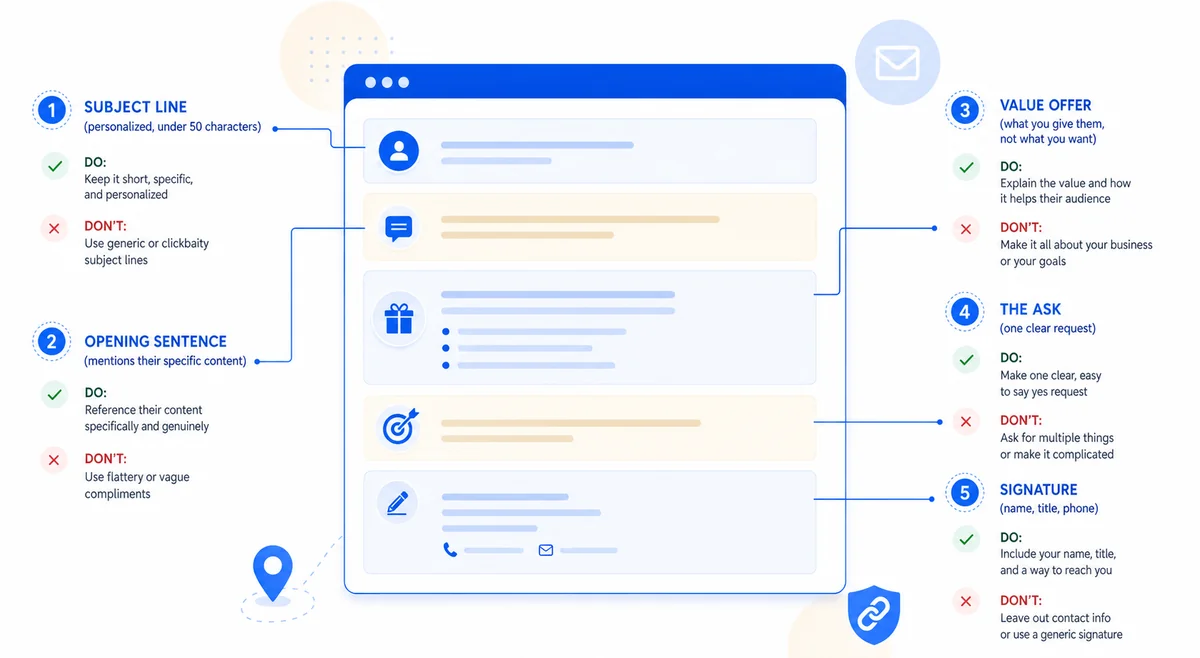
Citations and backlinks differ: a citation is any mention of your name, address, and phone number, while a backlink needs a hyperlink, and both feed local SEO. BrightLocal at $49 audits NAP consistency across 60+ directories, which feeds straight into GBP optimization for service-area businesses, and Whitespark Pro at $58 runs the deepest niche discovery in trades like locksmith SEO and chimney sweep marketing. For the methodology, read local citation sites and a closer look, and for how citations move rankings see NAP consistency and local SEO.
Buying the tools without a workflow wastes the monthly fee. This sequence earned Or at denvergaragedoor.com his Denver garage door rankings against a 253-review competitor on 13 reviews of his own, and put Momo at americaschimneysweep.com in the California chimney sweep top three in 9 months.
The full workflow runs 4 to 6 hours per client per week at Pro tier.
Or runs denvergaragedoor.com. He arrived with 42 referring domains, mostly auto-generated directories plus 3 paid Fiverr links, while his biggest Denver competitor had 253 Google reviews. Month 1 I ran SEMrush Backlink Gap on the top 5: 2347 raw domains, 84 after manual vetting, 47 into outreach. Month 2 I pitched a Denver home improvement blog a spring-safety counter-piece with a local snowfall angle, and it published in week 6. By month 9 he had 47 new editorial links, outranked the 253-review competitor with 13 reviews of his own, and ChatGPT cited him for "best garage door Denver." The full story is in my local SEO case study.
Three paths exist. DIY means buying SEMrush, Hunter, and GMass for about $334 a month and running outreach in spare evenings: 8 to 15 hours a week, 1 to 3 links a month, and most owners burn out by month 4. A managed service like my Pro tier at $1,500 delivers 15 backlinks a month, with no PBNs. Buying links from Fiverr packages costs $50 to $300 each, and the risk is total: deindexing that can take many months to recover from. The honest read: DIY for disciplined owners with 10+ hours a week, a managed agency for everyone else, and bought packages never.
Two patterns show up often that the Moz and AIOSEO articles never mention. First, agencies sell raw SEMrush exports as "research deliverables," a Backlink Gap PDF with zero analysis billed as monthly work. Second, editors get the same templated pitch from agency after agency, and they ignore it; a pitch that references a specific article they published gets read. The flip side is that free tiers stretch far, so a disciplined solo operator can run their own local link building workflow for under $80 a month.
Yes. Local ranking factor surveys, such as Moz's, have long placed links among the main local signals, alongside Google Business Profile signals and reviews. Since 2023 quality outweighs quantity, so a handful of editorial links beats a hundred directory listings.
Sometimes. A citation lists your business name, address, and phone number; if it includes a hyperlink it is also a backlink, and if not it stays a citation. Google treats unlinked brand mentions as a real but weaker signal, and I audit both during onboarding.
The strongest come from regional news affiliates, city publications, industry blogs, chamber of commerce and BBB directories, trade association sites, and city government supplier pages. For a roofer, the local builders' association is usually the first one I ask; more in SEO for roofing companies. Avoid generic directories, paid listicle sites, and any publication soliciting guest posts in a public footer.
Between $400 and $1200 a month by scope. A starter setup of SEMrush ($249.95), Hunter Growth ($59), GMass ($25), BrightLocal ($49), and free Search Console runs about $383; the Pro setup adds Ahrefs, Pitchbox, and Whitespark, near $1185. Annual commitments cut roughly 20%.
The strongest local link building services share one stack: SEMrush and Ahrefs for intelligence, Pitchbox or GMass for outreach, Hunter.io for email, BrightLocal and Whitespark for citations, and Search Console for verification. On a budget, start with the Hunter free tier, GMass, and Search Console.
First links typically earn within 4 to 8 weeks, ranking impact follows in 8 to 16 weeks as Google re-evaluates link signals, and full local pack impact shows at 6 to 9 months for most trades. I cover the timeline math in how long local SEO takes.
If you read this far, you know the workflow, the tools, and the cost. Some contractors run the stack themselves on $400 a month; others hand it to an agency. My Pro tier at $1,500 a month includes the full tool stack, 15 backlinks a month, and monthly reporting; Custom, from $2,500, covers multi-location work. I cap my roster so every client deals with me directly, no VA team and no templated pitches; here is why I keep the client list small. Book a 30-minute call and I will pull your competitor link gap and show you the 5 strongest opportunities live on the call.

I specialize in home services SEO: taking websites that sit invisible on page three and turning them into the business Google and ChatGPT recommend first. I started on the developer side, writing software and doing SEO on the side, until I saw how much home-service owners were overpaying for work that quietly hurt them. So I built a method that fixes the broken technical work and the outdated thinking behind it.
From garage door companies to plumbers, roofers, locksmiths and cleaning services, the playbook is the same: rank where your customers actually search, earn real reviews, and back it with a fast site that books the job. No PBNs, no bought reviews, no directory spam. Only work that survives Google’s next five updates. See exactly how it’s priced on the pricing page.
Free 30-minute strategy call