Med spa lead generation done right looks like Linoy at SASS Facial Spa in Sarasota, Florida, an Israeli immigrant who built the brand from one treatment room. She came through a referral chain that started with Or at Denver Garage Door. Her Squarespace site was so slow Google could not crawl half her treatment pages. We rebuilt it, then layered SEO under the Instagram funnel as a complement. Request a site review and get a human reply within 24 hours.
Med spa lead generation is the work of producing booked consults at a predictable cost without paying for leads a competitor already bought. The model has two sides. Shared-lead platforms like RealSelf and BuildOK sell each inquiry to three to five clinics. Exclusive channels like Google organic, the local pack, Instagram DMs, and ChatGPT citations send the buyer straight to you, and a real program shifts the mix toward exclusive over 6 to 12 months. Unlike hvac lead generation SEO playbook or chimney sweep lead generation SEO playbook, this niche is Instagram-dominant and booking-flow dependent, which is why SEO for med spa work differs from any other trade. I run it as a done-for-you program so owners spend zero hours on the mechanics.
I have audited around 30 med spa sites over the last 18 months, and the same four breaks show up every time. First, a homepage that sells every service at once: a buyer searching "lip filler Botox 30s" lands on a page about "wellness and confidence" and bounces in 8 seconds. The fix is treatment-specific pages, each with its own intent and booking link.
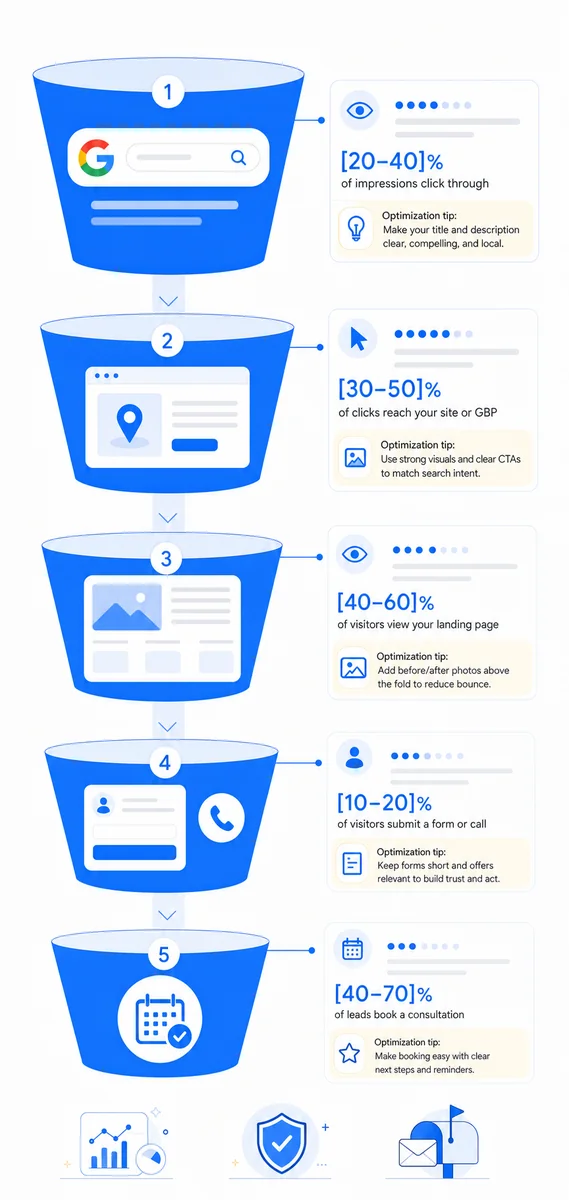
Second, booking-flow friction. A 9-field single-screen form asking for name, treatment, time, insurance, and a $50 deposit converts at 2 to 4 percent. Split into three short screens, it converts at 18 to 28 percent.
Third, Instagram orphaning. The clinic posts daily to 12,000 followers, collects 40 DMs a week, and routes them to a Google Form with no CRM, so half the DMs ghost. Call tracking software for lead generation closes the measurement gap underneath. Fourth, AI engine invisibility: ask ChatGPT for "best med spa in Sarasota for HydraFacial" and you get three names. If yours is not one, ChatGPT sends those leads elsewhere.
A handful of factors separate ranked sites from invisible ones. Google Business Profile category is the most overlooked: "medical spa" as primary, with secondaries like "skin care clinic." Most clinics pick the wrong primary and lose the local pack. Treatment-specific pages come next; a site with 12 of them ranks across 12 clusters, while a single services page ranks for nothing.
Schema markup with the right MedicalBusiness subtype is where nearly every competitor fails. Review velocity matters by vertical: Google reviews drive the local pack, RealSelf drives aesthetic queries. AI citations from ChatGPT, Perplexity, and Google AI Mode are now a discovery channel of their own. Core Web Vitals round it out: med spa traffic is 78 percent mobile, and a page loading at 4.5 seconds on 4G loses 32 percent of sessions.
The backbone is the House Call Method I run across every niche: Audit, Fix, Build, Track. Audit comes first. I run a full technical audit, then ask ChatGPT, Perplexity, and Google AI Mode for the best med spa in your city per treatment, read every cited source, and register your business in each. Most clinics show up in only 8 to 12 of the 40+ directories AI engines trust.
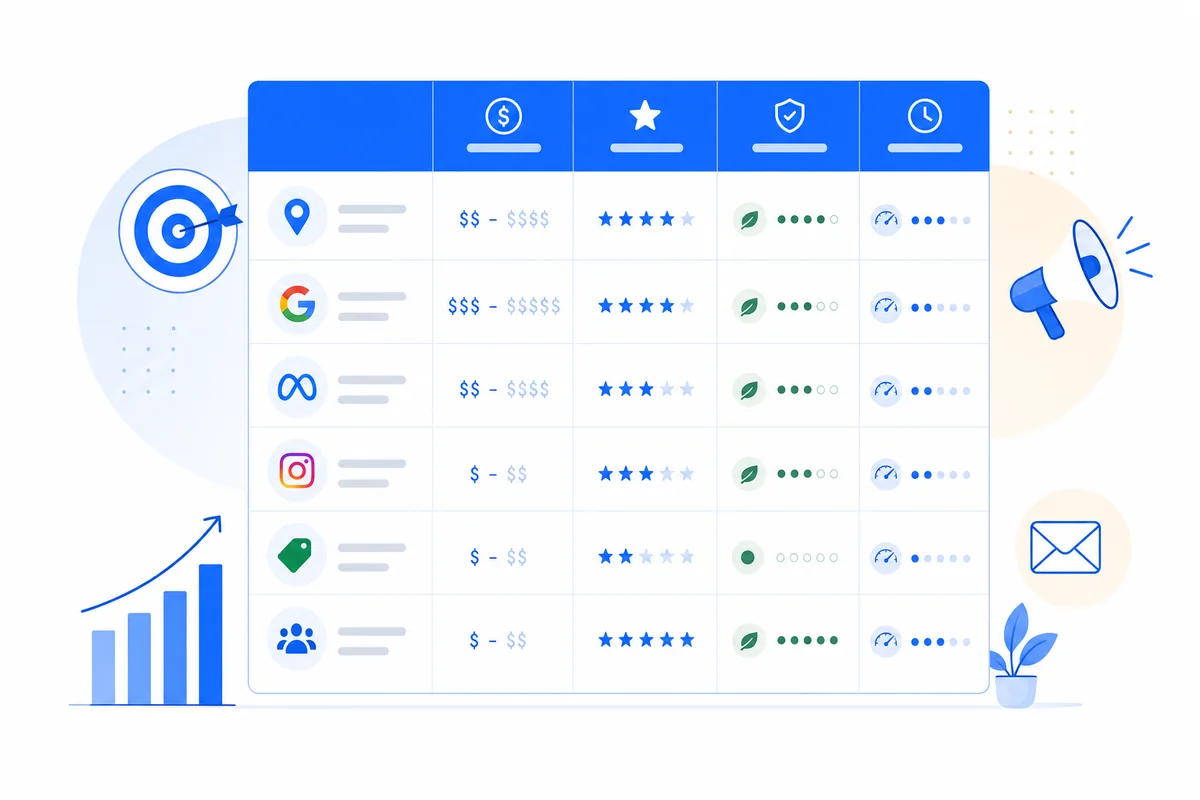
Fix clears site speed, mobile rendering, broken schema, and indexation gaps. I once found seven unindexed treatment pages on one Squarespace site, killing 40 percent of organic potential. Build then ships treatment-specific pages in priority order: Botox, HydraFacial, microneedling, and laser hair removal. Each page ships with SEO content repurposed as Reels and DMs routed to a CRM tied to booking data. Track closes the loop monthly across rankings, AI citations, booking conversion, and no-show rate.
Linoy runs SASS Facial Spa in Sarasota. Starting state: red Core Web Vitals, a 6.2-second mobile load on clean 4G, and a 9-field booking form converting at 4 percent. Instagram already drove roughly 70 percent of bookings; SEO produced about 12 organic visits a day, mostly branded.
I rebuilt the site on a fast modern stack with treatment-specific pages, the full schema stack, a 3-step booking flow with deposit capture after time selection, and SMS confirmations. By month 4 organic traffic tripled. By month 6 the booking page converted at 22 percent against the original 4 percent, and no-shows dropped from 28 percent to 11 percent. Same traffic, five times the bookings. The visual side of that rebuild lives on the how I rank these sites.
The Or lesson from Denver Garage Door applies here: a 5-star review naming "HydraFacial" lifts ranking for HydraFacial queries far more than a generic review. His case, 13 reviews beating a 253-review competitor, started the referral chain that brought Linoy to me, and an affordable SEO approach built on citation reverse-engineering that keeps compounding long after a generic services page stalls.
I publish pricing in the open. Most med spa agencies hide it behind a "schedule a call" wall, which tells you something.
| Tier | Monthly | What is included | Best for |
|---|---|---|---|
| Starter | $750 | Technical audit, schema markup, GBP optimization, 2 treatment pages per quarter, citation reverse-engineering across 30+ directories, monthly call | Single-location clinics, 30 to 80 bookings a month |
| Pro | $1,500 | Starter plus 4 treatment pages and 2 city pages per quarter, Instagram funnel with CRM routing, AI optimization for ChatGPT and Google AI Mode, booking page CRO, monthly reporting | Established clinics scaling, where most clients start |
| Custom | From $2,500 | Pro plus city pages per location, advanced CRO, Facebook and Google Ads management, reporting deck, direct Slack access | Multi-location groups, 200+ bookings a month |
No setup fees. No 12-month contracts. Month to month, cancel anytime. A clinic paying $2,500 a month to a vendor with zero treatment-specific pages is paying for work that does not move the needle.
Instagram and Facebook are the right top-of-funnel channels because aesthetic buyers evaluate visuals before they book a treatment. A 15-second Reel of a HydraFacial in progress earns trust faster than 800 words of copy. For Linoy, Instagram drives roughly 70 percent of bookings and SEO drives 25 percent with higher commercial intent. Search complements the visual funnel rather than replacing it.
Every med spa running a real lead program needs four layers: a fast website with treatment-specific pages and a 3-step mobile booking flow; a Google Business Profile with the right primary category and steady reviews; an Instagram funnel with DM-to-CRM routing; and a booking platform with SMS confirmations and deposit capture after time selection. Without all four, the program leaks at whichever layer breaks first.
Instagram handles awareness through daily Reels and before-and-after carousels. Facebook handles retargeting, hitting anyone who watched 75 percent of a Reel within 24 hours, and TikTok reaches Gen Z through short-form myth-busting. The CRM behind all three turns social media from a vanity metric into the largest top-of-funnel channel you have.
Agencies that sell one package to every vertical miss three things that define this niche. First is the intent split: "med spa near me" searches come from browsers in research mode, while commercial buyers search "Botox forehead lines cost [city]," so a single services page catches the wrong intent. Instagram and SEO feed each other rather than running as separate budgets. The booking form is the third gap: higher rankings handed to a clinic with a 9-field form leak every gain.
AI engines reward source authority, content clarity, and citation breadth. A page that says "competitive pricing" gets ignored; a page that says "Botox runs $12 to $18 per unit in Sarasota" gets quoted. Your site gets built with that clarity, and most competitors are not, so the window to lock in AI citations is now.
My med spa marketing services start with a free audit covering technical health, schema gaps, Google Business Profile review, treatment page coverage, AI visibility across ChatGPT and Perplexity, Instagram funnel review, and a booking conversion estimate, delivered as a 12 to 18 page PDF with a 30-minute call. It is real work, not a sales call: I have turned away clinics where the budget belonged on Instagram first. Book it through a free baseline call and I will reply within 24 hours.
I am Lior Daniel, founder of HouseCall SEO, a software developer with 6+ years of SEO work specializing in AI engine optimization for US home service and aesthetic brands. Before SEO I worked at government and airline-sector organizations. My clients include Linoy at SASS Facial Spa, Or at Denver Garage Door, Tomer at Pine Garage Doors, Momo at America's Chimney Sweep, and Alex at Ace Locksmith SF. I named the agency after the phrase four home service owners used without thinking: house call. The brand had to live in their language, not mine.
The Starter plan at $750 a month covers a single-location clinic: technical audit, schema markup, GBP optimization, two treatment pages per quarter, and citation reverse-engineering across 30+ directories AI engines trust. For clinics doing 30 to 80 bookings a month, it lays the full foundation before scaling to Pro.
A real med spa SEO company builds treatment-specific pages, integrates Instagram funnels with CRM routing, fixes booking conversion, and optimizes for ChatGPT and Google AI Mode citations. Most big-name aesthetic agencies lag on AI work and treat Instagram as a separate budget. With HouseCall SEO the founder does the work.
Programs run $750 to $2,500+ a month. Cost per lead on Pro at the 6-month mark amortizes to $8 to $25 against 40 to 90 bookings monthly, versus RealSelf at $40 to $200 per shared lead with an 8 to 14 percent close rate. The math wins over 12 months.
Score four things before you sign: whether they specialize or run one playbook for everyone; whether they name real clients with live URLs you can verify, like Linoy at sass-srq.com; whether they report booked consults, not impressions; and whether the founder does the work.
First ChatGPT and Perplexity citations appear at 60 to 90 days, local pack movement at 90 to 120 days, real organic booking lift at 4 to 6 months, and full maturity at 9 to 12 months. Booking CRO and Instagram tightening can produce same-week gains because they fix conversion on traffic you already have.
Yes. Botox, HydraFacial, microneedling, and laser hair removal each carry different buyer intent, price ranges, and research depth, so one services page cannot serve four intents. Build sequence runs highest-margin first, highest-volume second: Botox, then HydraFacial, then microneedling, then laser hair removal.
If your med spa pays $150 per shared RealSelf lead, your booking page converts at 4 percent on mobile, and your agency has built zero treatment-specific pages this quarter, you are paying for the wrong fight. I will tell you the truth in 24 hours. Book a free SEO consultation or run a free baseline site review first if you want data before the call.
I specialize in home services SEO: taking websites that sit invisible on page three and turning them into the business Google and ChatGPT recommend first. I started on the developer side, writing software and doing SEO on the side, until I saw how much home-service owners were overpaying for work that quietly hurt them. So I built a method that fixes the broken technical work and the outdated thinking behind it.
From garage door companies to plumbers, roofers, locksmiths and cleaning services, the playbook is the same: rank where your customers actually search, earn real reviews, and back it with a fast site that books the job. No PBNs, no bought reviews, no directory spam. Only work that survives Google’s next five updates. See exactly how it’s priced on the pricing page.
Free 30-minute strategy call