Dentist SEO marketing is ranking a dental practice on Google, Google Maps, ChatGPT, and Google AI Mode for the queries patients run before booking a cleaning, a crown, Invisalign, or an insurance-filtered visit. It combines technical SEO, local depth, schema with Dentist and MedicalBusiness subtypes, service pages split between general and cosmetic, insurance-acceptance pages per payer, and AI engine optimization. For the metro-specific breakdown, SEO expert dentist marketing in Houston covers that market directly.
The output is new booked patients per month below the cost per acquisition of Google Ads and ZocDoc. For cosmetic dentistry, Invisalign and veneers sell at $3,000 to $20,000 and the buyer is in a research cycle SEO is built to win.
Four common leaks erode dental rankings. First: YMYL. A site without a real DDS byline and medically reviewed content gets suppressed no matter how clean the keyword work is. Second: the cosmetic-versus-general split. A patient searching family dentist near me and one searching Invisalign cost are not the same buyer. Pushing both to one homepage loses both. Third: insurance. Practices that skip carrier-specific pages lose the click before the patient sees the homepage. Fourth: review authenticity. A 50-review practice with treatment-specific feedback outranks a 300-review practice with generic five-star spam.
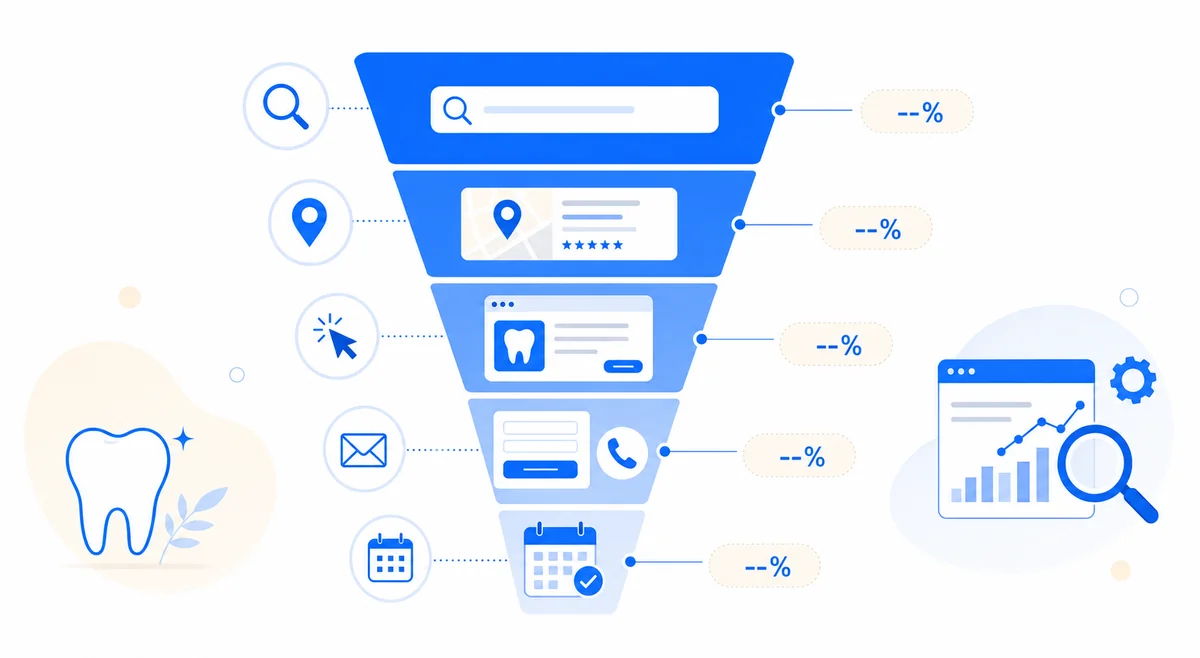
I have audited 40+ dental sites in the last 18 months. Winning practices share these factors: DDS author EEAT with state license number on every cornerstone page; full schema stack (zero of the top five competitors deploy any; see why schema markup is important); service pages with cosmetic and general split; insurance-acceptance pages converting at 5 to 12 percent versus 1 to 3 percent for generic pages; mobile Core Web Vitals under 2.5 seconds LCP; a Google Business Profile with weekly posts (see our GBP rebuild process); neighborhood-level local dentist SEO pages; and AI engine citations (see where AI engines cite you).
Four steps for every dental client. Step 1: YMYL foundation: dentist bio pages with credentials, license numbers, and a Medically reviewed by note on each cornerstone page. Step 2: citation reverse-engineering: I query ChatGPT, Perplexity, and Google AI Mode for the best dentist in your city and register your practice in every cited source. Step 3: service-page build with general and cosmetic split, each page covering competitor angles plus gaps, with your dentists named and pricing stated. Step 4: schema deployment and AI-first Q&A format. See monitoring SEO performance in AI search for tracking.
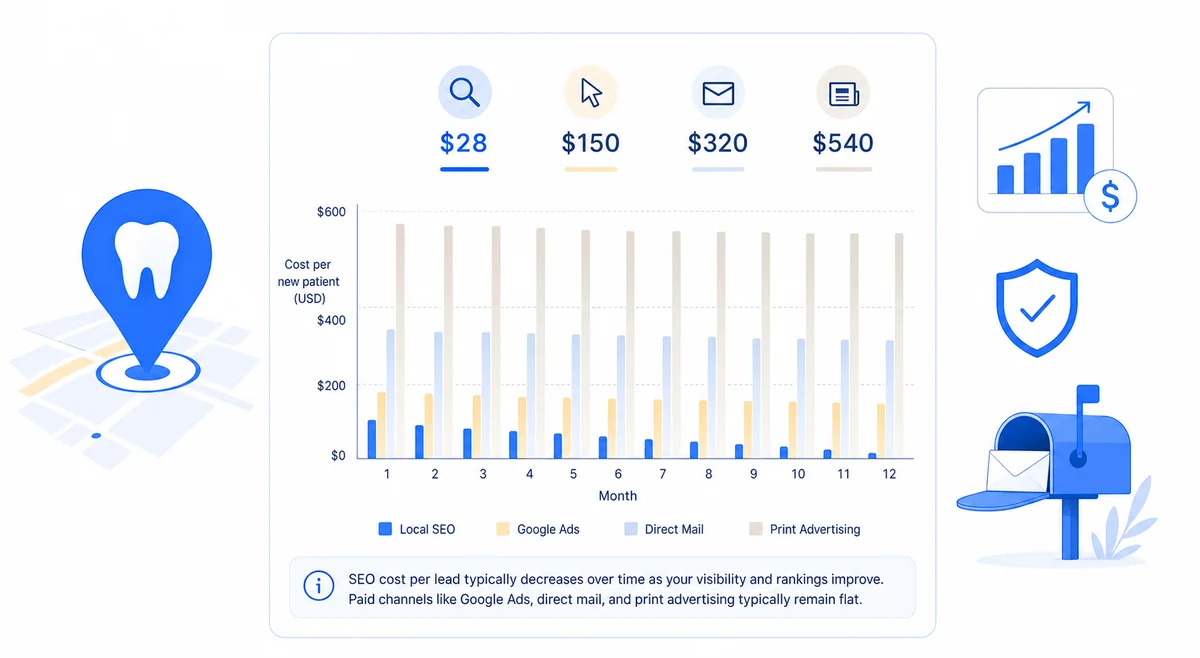
My client Or at Denver Garage Door beat a competitor with 253 Google reviews using 13 real reviews. The difference was schema, AI citation work, and content depth. The same playbook applies to dental with the YMYL author overlay on top. My med spa client Linoy at SASS Facial Spa tracks the same curve: AI citations at 60 to 90 days, local pack movement at 90 to 120 days, real booking lift at 4 to 6 months. A single cosmetic case at $5,000 to $20,000 from organic search pays for several months of investment by itself.
I publish pricing because most dental agencies hide it. For why $750 is the floor, see why cheap plans fall short.
| Tier | Monthly | What you get | Best for |
|---|---|---|---|
| Starter | $750 | YMYL author build, schema stack, GBP rebuild, 4 service pages, 2 insurance pages, monthly reporting | Solo dentists, one location, general dentistry focus |
| Pro | $1500 | Starter plus full insurance-page set (8 to 12 carriers), cosmetic split, AI engine optimization, review acquisition workflow | Established practices, 10+ service lines, ready to scale |
| Custom | $3000+ | Pro plus multi-location, neighborhood pages, CRO on booking flow, monthly content review with lead clinician | Multi-location dental groups, DSOs, Invisalign volume plays |
No setup fees or annual contracts. Anything below $750 is templated work that fails the YMYL bar.
Every section has a clear question, a clear answer, and a specific number. AI engines pull from that structure. Your dental site gets built the same way: Q&A blocks on every service page, dentist names and license numbers in the byline, and insurance-acceptance pages with carrier names. See how AI and LLM ranking works for the mechanics.
Every dental prospect gets a free audit before any contract. It covers mobile Core Web Vitals, schema status, YMYL author readiness, keyword positions, insurance-page gaps, and AI citation footprint on ChatGPT and Perplexity. Takes 2 to 3 hours.
I am Lior Daniel, founder of HouseCall SEO. Software developer with 6+ years of SEO experience, formerly at government and airline-sector organizations. Clients include Or (Denver Garage Door), Tomer (Pine Garage Doors), Momo (America's Chimney Sweep), Linoy (SASS Facial Spa), and Alex (Ace Locksmith SF). I do not own a dental practice. I run SEO for the dentists who do.
Book through the intake form. No popups, no sales call first. I reply within 24 hours.
Real DDS bylines with medically reviewed content, full schema deployment, a cosmetic-versus-general site architecture, and insurance-acceptance pages per payer. Each layer compounds: EEAT clears YMYL suppression, schema wins zero-click features, and insurance pages convert at 5 to 12 percent. Together, they bring patients through the door.
HouseCall SEO runs $750 for Starter, $1500 for Pro, $3000+ for Custom. No setup fees or annual contracts. A single Invisalign case at $5,000 covers months of investment once the program matures at 9 to 14 months.
The best agency in 2026 ranks in Google, Maps, and AI search simultaneously, prices transparently, deploys schema, and builds insurance-acceptance pages per payer. Adit, ProSites, and PatientGain have brand recognition but lag on AI optimization and YMYL author work. Ask for three dental case studies with traffic and booking numbers. If they cannot produce them, move on.
AI citations at 60 to 120 days. Local pack movement at 90 to 150 days. Real patient lift at 4 to 7 months. Full maturity at 9 to 14 months. If you cannot commit to 6 months, do not start.
Local SEO for dentist practices means ranking in the Google local pack, Google Maps, and AI engine responses for location-based queries. It requires a properly run Google Business Profile, neighborhood-level pages, citations on dental-specific directories (Healthgrades, Zocdoc, ADA Find-a-Dentist), and review acquisition under YMYL standards.
Dentist SEO is one specialty within our broader local SEO for home service businesses.
Off-site, we build authority through local link building.
I specialize in home services SEO: taking websites that sit invisible on page three and turning them into the business Google and ChatGPT recommend first. I started on the developer side, writing software and doing SEO on the side, until I saw how much home-service owners were overpaying for work that quietly hurt them. So I built a method that fixes the broken technical work and the outdated thinking behind it.
From garage door companies to plumbers, roofers, locksmiths and cleaning services, the playbook is the same: rank where your customers actually search, earn real reviews, and back it with a fast site that books the job. No PBNs, no bought reviews, no directory spam. Only work that survives Google’s next five updates. See exactly how it’s priced on the pricing page.
Free 30-minute strategy call